Ministry of Textiles to formulate cotton security policy
Aims to make India cotton surplus by next decade
Anindita Dey Mumbai The Ministry of Textiles proposes to formulate a cotton security policy so as to avoid any domestic supply distortions across the textile value chain and make India a cotton surplus nation in the next decade. This is proposed to be implemented in the new plan period by 2016-17.
According to officials, the cotton security policy will be worked out going by the global shortages and price volatility for raw cotton which is expected to continue over next few years. Thus this policy will be formulated in consultation with the Prime Ministers’ Economic Advisory Council, ministry of finance, ministry of agriculture and ministry of commerce and industry.
As per a rough estimate of the ministry, cotton production is expected to reach 475 lakh bales by the end of the 12th plan period (2012-17).
Apart from strengthening national handloom Development Corporation and raw material banks yarn depots, the ministry is proposing a special subsidy package on the ground level to sustain long duration crops like organic and suvin cotton. Suvin cotton is the only commercially available fibre with spinnability of around 240s count. The highest production of suvin at 36000 bales (170 kg) was recorded in the year 1989-90, said officials. However the production of suvin cotton has been depleting steadily over the years and currently stands around 300 metric tonne or around 1250 bales. Similarly, organic cotton fibre which is extremely important to Indian agronomy is also depleting in production.
As per reports, all India arrival of cotton during the year 2013-2014 (as on 20.02.2014) has decreased by 11.99 per cent vis-a-vis corresponding period of the previous year. Procurement of cotton by Cotton Corporation of India during the Cotton year 2013-2014 (as on 20.02.2014) under MSP is 0.408 lakh bales and the same was 22.39 lakh bales in the corresponding period of the previous year. The normal procurement (commercial purchase as on 20.02.2014) is 2.536 lakh bales for the current Cotton year.
For the year 2014-15, cotton consumption in the country is expected to increase to 430 lakh bales while production will be around 45 million bales. While cotton production is growing at about 5 per cent, increase in yarn production is at more than 10 per cent. Thus there is a mismatch in availability of extra long staple cotton.
India, on the other hand, is a major cotton producer, consumer and exporter. Therefore the ministry has outlined that policies are needed to encourage the production of genetically modified cotton and other organic fibres like suvin and ELS (extra long staple) cotton.

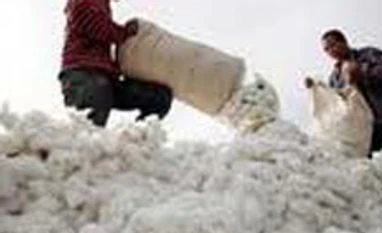 "Ministry of Textiles to formulate cotton security policy")


 Connect with us on WhatsApp