Need to remove governance hurdles at lower level: Nirmala Sitharaman
Technology while increasing productivity also has the downside of eliminating certain types of jobs.
Ishan Kumar Bakshi New Delhi Regulatory hurdles at lower levels of governance need to be eased out so that ease of doing business in India improves, said Minister of State for Commerce and Industry Nirmala Sitharaman at the India Economic Summit of the World Economic Forum. But the priority remains jobs creation, she added.
"While foreign direct investment (FDI) flows to India have increased significantly, the focus has to be that these flows translate into job creation," she said.
With a million individuals entering the labour force every month, creating productive jobs is perhaps the biggest challenge the country is facing.
Speaking at the inaugural session, Vice Chairman of General Electric based in Hong Kong John Rice said that skilling the labour force and improving productivity is the top agenda. The focus has to be on the right training because a very different set of skills is required to lead in this century, he added.
Vijay Shekhar Sharma, Founder and CEO of Paytm, argued that the digital economy offers unconditional opportunity for India. Citing the example of Ola, a taxi aggregator, he said technology has the ability to create jobs.
But Johan Aurick, Global Managing Partner and Chairman AT Kearney offered a note of caution saying that while there is reason to be optimistic about india, India has broken into the top 10 on the FDI forward looking index, there are plenty of challenges -- the biggest being the tension between the digital economy and job creation.
On the issue of maintaining a high growth trajectory for a sustained basis, Gopinath said, "While many countries have had spurts of growth but that has not been sustained over a long period of time. To achieve this requires sustained reforms in all spheres such as social and political."
According to NITI Aayog CEO Amitabh Kant, the only way to grow at 8 per cent on a sustained basis is to use technology to leapfrog.
"We need to innovate for urbanisation, sewage treatment. The process of technology needs to be imbedded into the process of urbansiation," he said, adding that, "Radical reforms are needed to restructuring the health and education sectors to support high growth on a sustained basis."

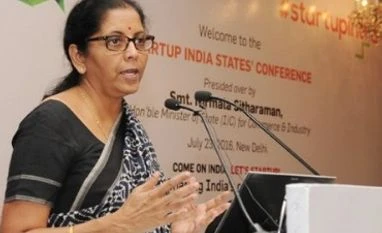 "Need to remove governance hurdles at lower level: Nirmala Sitharaman")


 Connect with us on WhatsApp