No shift on nuclear power in India: AEC chairman
Its the important option amidt depleting fossil fuel reserves
Sanjay Jog Mumbai Notwithstanding the growing opposition especially after the Fukushima nuclear accident took place in March 2011, the Atomic Energy Commission (AEC) has clarified that there is no shift in the policy on nuclear power in India. Dr R K Sinha, chairman, AEC and Department of Atomic Energy secretary in his speech at the ongoing international ministerial conference organised by International Atomic Energy Association said the nuclear power is based on the utilisation of India’s nuclear resources of modest uranium and abundant thorium, through the closed fuel cycle option, and the 3-stage programme, aimed at large-scale deployment of Thorium in the long-term.
Sinha said the constraint of depleting reserves of fossil fuels, leave alone the sheer enormity of the quantities of coal required, taken along with the need to shift to low carbon energy sources for addressing the global warming related concerns, would drive the options that could meet the Indian energy needs in future. "It is here, that nuclear energy becomes a very important option,'' he noted.
With regard to current nuclear power projects, Sinha said the construction of four indigenously designed 700 MW Pressurised Heavy Water Reactors (PHWRs), two each at existing sites of Kakrapar in Gujarat and Rawatbhata in Rajasthan, is in progress. In addition, sixteen more PHWRs of 700 MW capacity will be progressively taken up for construction (twin units or quadruple units) at five different inland sites already identified. India is also planning to set up PWRs of indigenous design by mid 2020s.
He mentioned about the present state of the 2,000 MW Kudankulam project being developed under the nuclear co-operation between India and the Russian Federation (the erstwhile USSR). The unit-1 of Kudankulam project is in an advanced stage of commissioning, following multi-tier safety reviews. The 2nd unit is envisaged to follow suit about six months thereafter.
"Under the international civil nuclear co-operation agreement, additional options for expanding installed capacity through import of Light Water Reactors have been envisaged, and related discussions are underway with identified vendors, for setting up these reactors at designated coastal sites, including Kudankulam,'' Sinha said.
Furthermore, the first commercial fast breeder reactor of India - Prototype Fast Breeder Reactor (PFBR) of 500 MW capacity - is at an advanced stage of completion of construction at Kalpakkam. All the major equipment of PFBR have been erected and the loading of dummy fuel bundles at peripheral locations is in progress. Indigenously developed mixed oxide type fuel pins for the first core of the PFBR are under manufacture and progressive delivery.
Sinha informed the gathering that after the Fukushima-Daiichi (F-D) accident in Japan, the Nuclear Power Corporation and the regulatory agency, Atomic Energy Regulatory Board (AERB), independently conducted extensive safety reviews, pursuant to which necessary measures to further augment safety of our operating nuclear power plants under extreme external events, have been taken. He said India will continue to contribute to the IAEA efforts in enhancing international cooperation in nuclear safety matters, especially through the various activities under the IAEA Action Plan for Nuclear Safety.

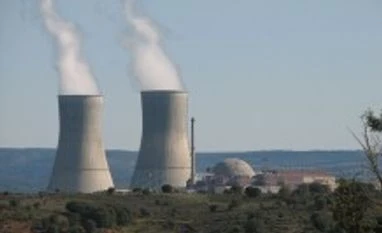 "No shift on nuclear power in India: AEC chairman")


 Connect with us on WhatsApp