No taxes please: Why GST will trigger a shift to unorganised used-car market

Prices of used cars moved up due to a 20-33% increase in tax in comparison to the pre-GST levels
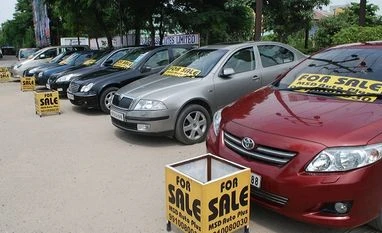
cars, vehicles
Shubham Parashar Mumbai
Last Updated : Jul 17 2017 | 9:05 AM IST
The introduction of the goods and services tax (GST), which has brought cheer for car-makers and buyers because prices of almost all products have come down, could derail the growth of the organised used-car market. The used car market had clocked healthy growth in recent years and, at 3.87 million vehicles a year, it was even bigger than the new car market of 3 million units. 

However, organised players like Maruti Suzuki True Value and Mahindra First Choice form only one-tenth of the used car industry.

Under the GST, the prices of used cars have moved up. This is due to a 20-33 per cent increase in tax in comparison to the pre-GST levels. 

Earlier the value-added tax (VAT) on sales of used cars varied from state to state. In Maharashtra, VAT was charged at 2.02 per cent on the sale value while in states like Andhra Pradesh and Telangana it went up to as high as 14 per cent. 

But the GST rate is going to be a minimum of 28 per cent plus 15 per cent cess, depending on the segment. This makes it 43 per cent on the value addition that a used car seller does. For example, the buyer in Maharashtra would have earlier paid a VAT of Rs 2,000 approximately on a small used car valued at Rs 1 lakh. 

Under the current system, if the dealer is charging Rs 20,000 (over and above his procurement price of Rs 80,000), the GST will be Rs 5,600.

Pawan Goenka, managing director (MD), Mahindra & Mahindra, has said that a high GST on used cars is likely to make the market unattractive. It will move buyers from organised channels to unorganised (buyer to buyer) ones.

Nagendra Palle, chief executive officer and MD, Mahindra First Choice Wheels, said: “Given the high rate, it will have an impact in two ways. Either consumers get less for their cars when exchanged, or, when dealers buy those cars, they have to sell them for more to account for the taxes. And on the other hand, it will encourage the unorganised sector.”

The unorganised used car market, though, is likely to expand because it does not pay taxes. “The organised sector might face challenges. While the new taxation system has standardised the rates, it has added the burden of additional tax,” said Shubh Bansal, co-founder and chief of marketing at Truebil, a market place for used cars.

One subscription. Two world-class reads.

Already subscribed? Log in

Subscribe to read the full story →
*Subscribe to Business Standard digital and get complimentary access to The New York Times

Smart Quarterly

₹900

3 Months

₹300/Month

SAVE 25%

Smart Essential

₹2,700

1 Year

₹225/Month

SAVE 46%
*Complimentary New York Times access for the 2nd year will be given after 12 months

Super Saver

₹3,900

2 Years

₹162/Month

Subscribe

Renews automatically, cancel anytime

Here’s what’s included in our digital subscription plans

Exclusive premium stories online

  • Over 30 premium stories daily, handpicked by our editors

Complimentary Access to The New York Times

  • News, Games, Cooking, Audio, Wirecutter & The Athletic

Business Standard Epaper

  • Digital replica of our daily newspaper — with options to read, save, and share

Curated Newsletters

  • Insights on markets, finance, politics, tech, and more delivered to your inbox

Market Analysis & Investment Insights

  • In-depth market analysis & insights with access to The Smart Investor

Archives

  • Repository of articles and publications dating back to 1997

Ad-free Reading

  • Uninterrupted reading experience with no advertisements

Seamless Access Across All Devices

  • Access Business Standard across devices — mobile, tablet, or PC, via web or app

Next Story



