
Oil producers tell Modi what went wrong
AOGO feels that the industry has been a victim of its own success
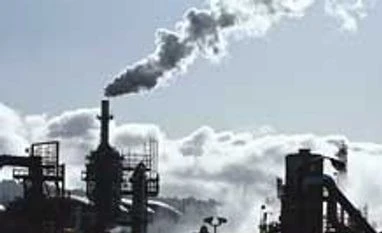 "Oil producers tell Modi what went wrong")
WebinarsNew
Deep DiveNew
Explore Business Standard
AOGO feels that the industry has been a victim of its own success
India's top hydrocarbon producers, under the banner of the Association of Oil and Gas Operators (AOGO), have written to Cabinet Secretary Ajit Seth to appraise the new government of what went wrong in the sector, while seeking measures like honouring the sanctity of contracts and quick decision-making.
The association submitted a power point presentation to the top bureaucrat detailing why India was losing sheen as an upstraem developer, leading to the country being marginalised in the geopolitics of hydrocarbons.
"As you are aware, the development process in the oil and gas industry has been on hold during the last few years," AOGO secretary general Ashu Sagar wrote in the lettter, a copy of which has been obtained by IANS.
"We trust this shall enable the prime minister to conduct a more thorough review after accounting for the operator's perspective," he added.
Seismic surveys of hydrocarbons fell 91 percent in the five years to 2012-13 in onshore blocks and 95 percent in the more challenging offshore regions, while the number of wells drilled has dropped 22 percent, the AOGO said.
"Private risk capital has dried up. Exploration activity has nosedived over the last five years", the association pointed out.
Some association members and successful explorers like Reliance Industries (RIL), Cairn India and BP are also involved in disputes with the government. Other members include state-run upstream player ONGC and downstream company Indian Oil.
According to AOGO, one wrong committed by the government is that it "moved away from the main objective of NELP (New Exploration Licensing Policy) of maximize exploration, production and energy security to a notional government revenue maximization".
"Entire industry has been held captive to issue with a single block," it said referring to the KG-D6 block in the eastern offshore operated by the RIL consortium that includes BP. Natural gas production here has fallen sharply leading to a bitter dispute between the petroleum ministry, which has blamed RIL, while the company said it suffered because of geological factors in the challenging deep-sea region.
AOGO feels that the industry has been a victim of its own success. "Quick significant discoveries made us lose perspective," it said.
It suggested that the government must help realistically assess the hydrocarbon resources, focus on providing geological information, improve the risk-reward ratio for investors and remove, or minimize, unnecessary controls that do not add value.
"Government role and methodology for financial oversight of operators needs clarity and transparency", AOGO said.
"It should develop robust PSC (production sharing contract)-based economic model with the help of experts for understanding of overall economics by key decision makers," it added.
First Published: May 29 2014 | 3:55 PM IST


 Connect with us on WhatsApp