
Pinarayi Vijayan leads protest against curbs on co-op banks
Kerala CM says state's co-operative sector holds deposits of Rs 1.27 lakh cr, primary co-op societies are stronger than urban ones
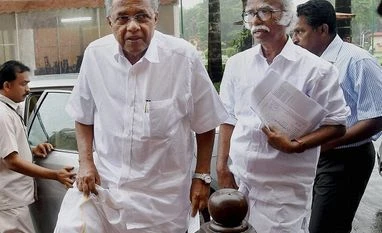 "Pinarayi Vijayan leads protest against curbs on co-op banks")
WebinarsNew
Deep DiveNew
Explore Business Standard
Kerala CM says state's co-operative sector holds deposits of Rs 1.27 lakh cr, primary co-op societies are stronger than urban ones
Launching the protest, Vijayan said that the co-operative sector in the state holds deposits worth Rs 1.27 lakh crore and that primary co-operative societies are stronger than urban ones. The RBI's move restricting co-operative banks from dealing with demonetised notes will impact the co-operative movement, which forms part of the day-to-day life of the people in the state, he added.
Vijayan said co-operative institutions are the ones providing agricultural loan in the true sense, while commercial banks are offering loans to farmers against gold. Farm loans under Nabard are also funded by the co-operative sector and it is also involved in various activities including supporting consumer stores providing groceries and medical stores at an affordable cost.
The chief minister said that the state's co-operative sector is not an abode of black money and destroying the sector means complete destruction of Kerala's economy. He said that public sentiment is to strongly resist any crisis to the co-operative institutions in the state.
Earlier, he said that the RBI had restricted the smaller co-operative banks from exchanging the old notes that had been withdrawn from the market with new ones and from accepting deposits of the demonetised 500- and 1,000-rupee notes. The cap for these banks to withdraw funds from other banks has been kept at Rs 24,000, which is equivalent to the cap fixed for every individual, said the government.
Vijayan alleged that while he and the state's finance minister visited Union Finance Minister Arun Jaitley to express the issues in the state and they received a good response from the Union Minister, the RBI soon came out with its view that it cannot allow co-operative banks under the purview of banks.
Detailing on the government's stand on this, Kerala Finance Minister T M Thomas Isaac in his Facebook account, said that while there are around 6,213 bank branches in the state, the district primary co-operative societies has around 4,800 branches and RBI is not utilising these banks to address the crisis.
The primary Co-opertive banks in the State has around Rs 80,000 crore investment in the State and out of this around Rs 2,400 crore is kept as cash while the amount after lending are deposited in district co-operative banks and other commercial banks. With the limit for withdrawal fixed at Rs 24,000, the only option for the customers is to transfer the amount from these co-operative banks to other commercial banks and this would end the primary co-operative banks future in the State, he alleged.
First Published: Nov 18 2016 | 7:54 PM IST


