PMO backs Pitroda's spectrum use views
The PMO also asked the secretary to send comments on Pitroda's advice by the 20th of this month
Katya B Naidu Mumbai The Prime Minister's office has written a letter to the telecom secretary asking the ministry to take note of PM's adviser Sam Pitroda's views on reactivating group of ministers (GoM) to focus on spectrum availability.
The PMO also asked the secretary to send comments on Pitroda's advice by the 20th of this month.
Sam Pitroda wrote a letter to the PM, calling for action to make 45 megahertz of vacated spectrum to be made available to the starved telecom sector. The Defence services have already released 20 MHz of 2G spectrum and 25 Mhz of 3G spectrum.
“Since the decision was taken by a group of ministers (GoM) on vacation of spectrum over three years and consequent vacation of 45 megahertz of 2G and 3G spectrum by defence services, there has been no initiative to secure the availability of more spectrum,” Pitroda wrote, in a letter to the Prime Minister, Manmohan Singh.
Pitroda believes that the time is 'opportune' for the GoM , as there are fresh possibilities of more spectrum being made available. The Defence is moving to its own dedicated optical fibre communication (OFC) network that will replace terrestrial wirelinks and release further spectrum.
“The OFC network is likely to commissioned over next year,” Pitroda said. As defence moves towards its own network, 10 Mhz of 2G GSM spectrum, 7.5 Mhz of 2G CDMA spectrum can be free for use by the telecom sector. Added to this, 25 Mhz of 3G spectrum too will be vacated by the Defence services.
The Department of Space (DoS) too can contribute towards spectrum availability. “DoS has earlier released 40 Mhz for mobile services. Out of the balance 150 Mhz, as per radio regulations. DoS has no proposal to utilise 80 Mhz. This frequency band has been earmarked internationally for 4G/BWA (broadband wireless access) services. This 80 Mhz spectrum could be made available for 4G/BWA services,” Pitroda said, in the letter.
Public broadcaster Prasar Bharti too is moving towards digitisation, and some spectrum which is being used in its current analogue mode, can also aid to the cause of spectrum scarcity in the telecom sector. An unspecified amount of spectrum in the 585-646 Mhz band can be made available for 4G services.
Effective utilisation of current spectrum is also on Pitroda's agenda as he believes that 'white spaces' can also help increase spectrum availability. White spaces are frequencies made available for unlicensed use in rural and urban areas derives off-speak hours when spectrum is not being fully utilised by the licencee.
“Most countries have already made regulations for exploitation of white spaces. Affordable broadband access in rural areas could be facilitated by exploiting white spaced in the de-licenced bands,” said Pitroda. However, for the use of white spaces requires the government to formulate a policy.

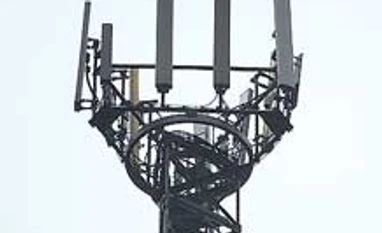 "PMO backs Pitroda's spectrum use views")


 Connect with us on WhatsApp