
Recovery in energy demand to continue despite Covid-led blip: Ind-Ra
The electricity generation increased 42.5 pe cent y-o-y to 115.5 billion units in April 2021
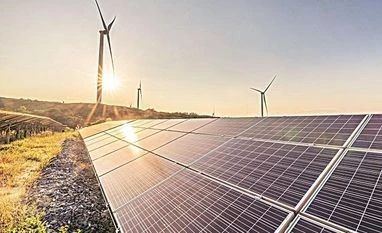 "Recovery in energy demand to continue despite Covid-led blip: Ind-Ra")
WebinarsNew
Deep DiveNew
Explore Business Standard
The electricity generation increased 42.5 pe cent y-o-y to 115.5 billion units in April 2021
India Ratings and Research (Ind-Ra) on Friday said the recovery in energy demand will continue despite COVID-19 led temporary blip.
India Ratings and Research (Ind-Ra) has published the May 2021 edition of its credit news digest on India's power sector.
The report highlights the trends in the power sector, with a focus on capacity addition, generation, transmission, merchant power, deficit, regulatory changes and the recent rating actions by Ind-Ra.
Ind-Ra estimates, as per a statement, the all-India energy demand would decline in May 2021 on a month-on-month basis, despite the peak summer season, and to remain below pre-pandemic levels.
This is on account of the continuation of COVID 19 led restrictions put out by certain states till May 31, 2021. With COVID cases peaking in May and announcements by certain states to open up from June, Ind-Ra expects energy demand to start recovering from June 2021.
In the first 25 days of May 2021, the all-India energy demand was 88.8 billion units (May 2020: 102.6 billion units; May 2019: 120.7 billion units). In April 2021, the all-India energy demand was higher by 39.3 per cent y-o-y at 118.4 billion units (March 2021: up 22.8 per cent) due to the lower base effect and the early onset of summer contributing to the higher demand.
The short-term power price at Indian Energy Exchange remained high at Rs 3.70/kWh in April 2021 (March 2021: Rs 4.07/unit; April 2020: Rs 2.41/kWh) on account of a high demand from the short-term power market.
The electricity generation increased 42.5 pe cent y-o-y to 115.5 billion units in April 2021 (March 2021: up 23.5 per cent), supported by 55.4 per cent y-o-y growth in thermal generation (up 29.2 per cent y-o-y), although hydro generation fell 18.4 per cent y-o-y (down 7.8 per cent y-o-y). Electricity generation from renewable sources increased 17.9 per cent y-o-y to 11.7 billion units in April 2021, with solar generation increasing 41.5 per cent y-o-y.
The improvement in energy demand and the reduced generation from hydro generation have helped the thermal plant load factor (PLF) increase to 66.7 per cent in April 2021 (April 2020: 42.2 per cent; March 2021: 66.5 per cent).
In April 2021, the thermal sector's PLFs rose on a y-o-y basis across the central, state and private sectors, increasing to 78.4 per cent (April 2020: 52.0 per cent), 60.3 per cent (33.5 per cent) and 62.0 per cent (41.6 per cent), respectively, it added.
(Only the headline and picture of this report may have been reworked by the Business Standard staff; the rest of the content is auto-generated from a syndicated feed.)
First Published: May 28 2021 | 6:01 PM IST

