Rs 2 lakh is the cash transaction limit, Aadhaar mandatory for I-T returns

The Rs 2-lakh limit applies to single transactions
Cash, Demonetisation, Currency
.
Indivjal Dhasmana New Delhi
Last Updated : Mar 22 2017 | 9:21 AM IST
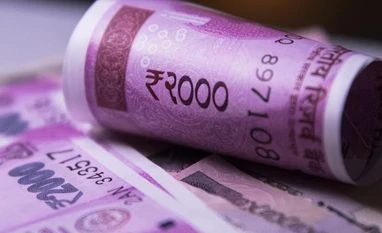
The Rs 3-lakh limit proposed for cash payments in the Budget for 2017-18 would be brought down to Rs 2 lakh as part of an unprecedented 40 amendments to the Finance Bill. 

Finance Minister Arun Jaitley moved the amendments in the lower House on Tuesday. This is aimed at tightening the noose on those dealing in cash.

Most other amendments — making Aadhaar mandatory for filing tax returns, applying for permanent account numbers (PAN) and allowing payments by only non-cash modes such as cheques, bank drafts or electronic transfers for electoral trusts — are also aimed at curbing black money.

A few are aimed at rationalising tribunals by merging these to reduce the number to 12 from 40.

The amendment related to reducing the cap on cash transactions comes amidst reports that digital transactions had declined after a spurt after demonetisation. 

“In the amendment to the Finance Bill, the government has proposed the limit of Rs 3 lakh for cash transactions be reduced to Rs 2 lakh,” Revenue Secretary Hasmukh Adhia tweeted. He added the penalty for violation would be a fine equivalent to the amount of the transaction. The penalty would be paid by individuals or establishments receiving the payment. 

The Rs 2-lakh limit applies to single transactions, those in aggregate from a person in a day, and to those relating to one event or occasion from a person. The provision does not apply to the government, banks and post offices.

The proposal said the penalty would not be levied if a person could give sufficient reason for contravention. Fines would be levied only by joint commissioners of the income-tax (I-T) department. 
 
On November 8 last year, Prime Minister Narendra Modi had demonetised the old series Rs 500 and Rs 1,000 notes, leading to a cash crunch in the economy. 

Analysts said the fine was too high. “The penalty is huge when the system is yet to get used to the new rules and appropriate infrastructure yet to be created for individuals, small businesses and jewellers,” said Neeru Ahuja of Deloitte.

While provisions were required to check the generation of black money, penalty should be low in the initial years, and raised only after the system got adjusted to it and proper infrastructure created, she added.

The current requirement of quoting PAN for cash spending also starts from Rs 2 lakh.

The value of digital transactions nationwide declined 1.5 per cent to Rs 92.6 lakh crore in February from Rs 94 lakh crore in November, according to provisional data on electronic payments released by the Reserve Bank of India (RBI). 

Also, currency in circulation started rising every week since January 13 till March 10, against contraction every week from November 11 to January 4, roughly a period when people were allowed to deposit money in scrapped Rs 500 and Rs 1,000 notes in banks.

As the Finance Bill was taken up for consideration in the Lok Sabha, Opposition parties protested against the introduction of the amendments. 

Saugata Roy of the Trinamool Congress said when the government introduced the Finance Bill in February, it had 150 clauses and seven schedules but now the government has added another 33 clauses and two schedules. “This is unprecedented and we have already protested,” he said.

Questioning the electoral bonds to bring transparency in poll funding, Congress member Deepender Singh Hooda said the amendments to the Representation of People’s Act was not incidental, as they were not related to tax. He suggested the government should have brought a separate Bill for the purpose.

Later, Communist Party of India (M) General Secretary Sitaram Yechury said several Bills had been smuggled into the Finance Bill; the move was a subversion of the Constitution, to bypass the Rajya Sabha as the Finance Bill was a money bill.

The Opposition’s objections were overruled by Speaker Sumitra Mahajan, who ruled that the “incidental provisions” involved in the amendments constituted a money Bill and therefore could be considered as part of the Bill.

Defending the amendments, Jaitley said if a substantial portion of a Bill dealt with imposition or abolition of taxes, then, even if it had incidental provisions, it could still be introduced as a money Bill. “No tax can be imposed without reference to courts or tribunals. These are incidental provisions,” he said.

In his Budget speech in February, Jaitley had said, “The predominance of cash in the economy makes it possible for people to evade taxes. When too many people evade taxes, the burden of their share falls on those who are honest and compliant.”

Changes on cards
 
  • Got proposes 40 amendments to various Acts under the Finance Bill
  • Apart from a cash ceiling, these include amendments to make Aadhaar mandatory for filing of I-T returns, applying for PAN
  • Amendments to the Companies Act in relation to non-cash payment to electoral trusts
  • Amendments to the Representation of People Act in relation to electoral bonds

One subscription. Two world-class reads.

Already subscribed? Log in

Subscribe to read the full story →
*Subscribe to Business Standard digital and get complimentary access to The New York Times

Smart Quarterly

₹900

3 Months

₹300/Month

SAVE 25%

Smart Essential

₹2,700

1 Year

₹225/Month

SAVE 46%
*Complimentary New York Times access for the 2nd year will be given after 12 months

Super Saver

₹3,900

2 Years

₹162/Month

Subscribe

Renews automatically, cancel anytime

Here’s what’s included in our digital subscription plans

Exclusive premium stories online

  • Over 30 premium stories daily, handpicked by our editors

Complimentary Access to The New York Times

  • News, Games, Cooking, Audio, Wirecutter & The Athletic

Business Standard Epaper

  • Digital replica of our daily newspaper — with options to read, save, and share

Curated Newsletters

  • Insights on markets, finance, politics, tech, and more delivered to your inbox

Market Analysis & Investment Insights

  • In-depth market analysis & insights with access to The Smart Investor

Archives

  • Repository of articles and publications dating back to 1997

Ad-free Reading

  • Uninterrupted reading experience with no advertisements

Seamless Access Across All Devices

  • Access Business Standard across devices — mobile, tablet, or PC, via web or app

Next Story



