Budget 2023-24: Stay on fiscal glide path, economists advise FM Sitharaman

The Finance Ministry was also urged to continue with long term loans to states to support their capex programs, and give them more leeway to spend, in order to boost growth

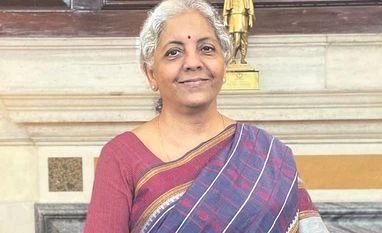
Nirmala Sitharaman
Union Finance Minister Nirmala Sitharaman
Arup Roychoudhury New Delhi
3 min read Last Updated : Nov 29 2022 | 12:01 AM IST
The Union government could target a fiscal deficit of 5.8-6 per cent of nominal GDP for 2023-24, and it should continue its capital expenditure push and look to simplify the personal income tax regime, economists recommended Finance Minister Nirmala Sitharaman and her team during their pre-Budget interaction on Monday.
 
Starting last week, Sitharaman had eight pre-Budget consultations this time. More than 110 invitees representing seven stakeholder groups participated in these meetings, the finance ministry said in a statement. The stakeholder groups included representatives and experts from agriculture and agro-processing industry; industry, infrastructure & climate change; financial sector and capital markets; services and trade; social sector; trade unions and labour organisations; and economists.
 
“Most economists have suggested that the fiscal deficit be kept between 5.8 per cent and 6 per cent in order to stay on the glide path towards a medium-term target of 4.5 per cent of GDP. The suggestions were that the Centre continue with its capex push, and look to simplify taxes,” said a person aware of the discussions with economists.
 
The finance ministry was also urged to continue with long-term loans to states to support their capex programmes, and give them more leeway to spend, in order to boost growth, the person said. The broad view was that such steps would create an enabling environment for demand, which is anyway picking up after two years of the pandemic.
 
The economists and experts who attended the meeting included N R Bhanumurthy of Dr BR Ambedkar School of Economics University, Ashwani Mahajan of Swadeshi Jagaran Manch, Poonam Gupta of National Council of Applied Economic Research, Monetary Policy Committee member Ashima Goyal, Karthik Muralidharan, Aditi Nayar of Icra, Santanu Sengupta of Goldman Sachs, Rahul Bajoria of Barclays, Madan Sabnavis of Bank of Baroda, and Deepak Mishra of ICRIER.


Apart from Sitharaman, the other budgetmakers who attended this and other meetings included Ministers of State for Finance Pankaj Chaudhary and Bhagwat Karad, Finance Secretary TV Somanathan, Economic Affairs Secretary Ajay Seth, Chief Economic Advisor V Anantha Nageswaran as well as secretaries from DIPAM, Financial Services, Corporte Affairs and other officers.
 
The recommendations by the economists are broadly similar to what industry bodies had suggested to Sitharaman, in their meeting last Monday. They said because of the global macroeconomic situation, the private sector may still not see a complete revival in capital expenditure, and hence urged the Centre to continue increasing capex in order to support infrastructure investment.
 
India Inc’s representatives said that the Budget should prioritise job creation and taxation measures, which would help increase broad-based consumption.
 
According to the Finance Ministry, representatives of stakeholder groups across eight meetings made a number of suggestions, including mechanism for green certification to help MSMEs, urban employment guarantee programme, rationalisation of income tax, creation of innovation clusters, schemes for improving domestic supply chains, reduction of taxes on electric vehicles, introduction of EV policy, Social Sector Entrepreneurship Fund for social impact companies, National Regulatory Authority for Water and Sanitation, coverage of unorganised workers under ESIC, continuation of public capex, fiscal consolidation, and lower customs duties.

 

One subscription. Two world-class reads.

Already subscribed? Log in

Subscribe to read the full story →
*Subscribe to Business Standard digital and get complimentary access to The New York Times

Smart Quarterly

₹900

3 Months

₹300/Month

SAVE 25%

Smart Essential

₹2,700

1 Year

₹225/Month

SAVE 46%
*Complimentary New York Times access for the 2nd year will be given after 12 months

Super Saver

₹3,900

2 Years

₹162/Month

Subscribe

Renews automatically, cancel anytime

Here’s what’s included in our digital subscription plans

Exclusive premium stories online

  • Over 30 premium stories daily, handpicked by our editors

Complimentary Access to The New York Times

  • News, Games, Cooking, Audio, Wirecutter & The Athletic

Business Standard Epaper

  • Digital replica of our daily newspaper — with options to read, save, and share

Curated Newsletters

  • Insights on markets, finance, politics, tech, and more delivered to your inbox

Market Analysis & Investment Insights

  • In-depth market analysis & insights with access to The Smart Investor

Archives

  • Repository of articles and publications dating back to 1997

Ad-free Reading

  • Uninterrupted reading experience with no advertisements

Seamless Access Across All Devices

  • Access Business Standard across devices — mobile, tablet, or PC, via web or app

Topics :Nirmala SitharamanFiscal DeficitCapexEconomistsFinance MinistryBudgetUnion budgetsB R AmbedkarIndia GDPIndia economyFinance minister

Next Story




