Summer crop planting lags as monsoon rains remain patchy in India

Planting of rice, the key summer crop, was at 18.5 million hectares on Friday, against 19.8 million hectares at the same time last year.
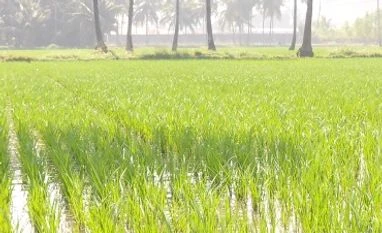
Rice field
Reuters New Delhi
2 min read Last Updated : Jul 26 2019 | 10:47 PM IST
Farmers in India have planted summer-sown crops on 68.9 million hectares, down 6.3% year on year, agriculture ministry data showed on Friday, marginally narrowing the sowing gap estimate from the previous week.

Farmers typically start planting rice, corn, cotton, soybeans, sugarcane and peanuts, among other crops, from June 1, when monsoon rains are expected to enter India. Sowing usually lasts until July.

Summer rains are crucial as nearly half of India's farmland lacks irrigation. The Ministry of Agriculture and Farmers' Welfare will keep updating the provisional sowing figures as it gathers more information from state governments. The planting figures are also subject to revision depending on progress of the June-September monsoon season.

Planting of rice, the key summer crop, was at 18.5 million hectares on Friday, against 19.8 million hectares at the same time last year, the ministry said. Corn planting was at 6.3 million hectares, almost unchanged from the same period last year.

The area planted with cotton was at 10.9 million hectares, up from 10.2 million hectares a year ago.

Sowing of soybeans, the main summer oilseed crop, was at 9.7 million hectares, compared with 10.1 million hectares at the same time in 2018. Other crop plantings, such as pulses and sugar cane, were also down year on year.

India's monsoon rains were 35 per cent below average in the week ending on Wednesday, with little rainfall over the central, western and northern parts of the country.

Overall, India has received 16 per cent less rain than average since the monsoon season began on June 1. Monsoon typically brings rainfall between 96 per cent and 104 per cent of a 50-year average of 89 cm (35 inches) during the four-month season, according to India's weather office.

Water levels in India's main reservoirs were at 25 per cent of their storage capacity, against 40 per cent at the same time last year, the latest government data shows. The average for the past 10 years is 35 per cent. 

One subscription. Two world-class reads.

Already subscribed? Log in

Subscribe to read the full story →
*Subscribe to Business Standard digital and get complimentary access to The New York Times

Smart Quarterly

₹900

3 Months

₹300/Month

SAVE 25%

Smart Essential

₹2,700

1 Year

₹225/Month

SAVE 46%
*Complimentary New York Times access for the 2nd year will be given after 12 months

Super Saver

₹3,900

2 Years

₹162/Month

Subscribe

Renews automatically, cancel anytime

Here’s what’s included in our digital subscription plans

Exclusive premium stories online

  • Over 30 premium stories daily, handpicked by our editors

Complimentary Access to The New York Times

  • News, Games, Cooking, Audio, Wirecutter & The Athletic

Business Standard Epaper

  • Digital replica of our daily newspaper — with options to read, save, and share

Curated Newsletters

  • Insights on markets, finance, politics, tech, and more delivered to your inbox

Market Analysis & Investment Insights

  • In-depth market analysis & insights with access to The Smart Investor

Archives

  • Repository of articles and publications dating back to 1997

Ad-free Reading

  • Uninterrupted reading experience with no advertisements

Seamless Access Across All Devices

  • Access Business Standard across devices — mobile, tablet, or PC, via web or app

Topics :Monsoon

Next Story



