Textiles ministry okays 10% dilution in jute packaging order for foodgrains

Decision on further relaxation of jute order for foodgrains is expected to be taken later this month
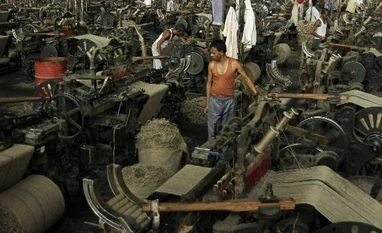
Jute Mills, Jute Industry, Jute
Jute Mills
Jayajit Dash Bhubaneswar
Last Updated : Jan 13 2017 | 7:06 PM IST
Amid a projected shortfall of more than 0.17 million bales (one bale is 180 kg) of B-Twill jute bags during the Rabi marketing season (RMS) for 2016-17, the Union textiles ministry has allowed a dilution of 10 per cent in the mandatory jute packaging order for food grains.

The estimated shortfall in B-Twill sacking bags will be offset by the use of high-density polyethylene (HDPE) and polypropylene (PP) bags. The department of food & public distribution is now empowered to take the call on use of plastic bags to meet the packaging requirement, the textiles ministry said in an office order. The quantum of 0.17 million bales marks 10 per cent of the total packaging requirement in RMS 2016-17. The dilution order will be valid till March 31, 2017.

A decision on further relaxation of the jute order for foodgrains is expected to be taken later this month. The Jute Packaging Materials Act, 1987 mandates compulsory packaging of food grains of 100 per cent in jute bags.

"There is a shortage in supply of jute bags and this may have promoted the Textiles ministry to permit 10 per cent dilution in food grains packaging. Currency crunch has hit supplies of raw jute to the mills", said a leading jute mill owner.

An inspection by the office of the Jute Commissioner shows woeful figures in the supply of jute bags in the states of Odisha, Telengana, Andhra Pradesh, Punjab, Chhattisgarh, Bihar and Haryana. Average despatched quantity of jute bags to these states (as on January 1, 2017) is only 18 per cent. On the premise of dwindling supplies, the Jute Commissioner's office had recommended a dilution of 10 per cent in food grains in favour of alternative packaging material.

The dilution move has triggered concerns in the jute industry hit hard by the demonetisation drive, putting to stake the future of 0.25 million jute workers in West Bengal.

One subscription. Two world-class reads.

Already subscribed? Log in

Subscribe to read the full story →
*Subscribe to Business Standard digital and get complimentary access to The New York Times

Smart Quarterly

₹900

3 Months

₹300/Month

SAVE 25%

Smart Essential

₹2,700

1 Year

₹225/Month

SAVE 46%
*Complimentary New York Times access for the 2nd year will be given after 12 months

Super Saver

₹3,900

2 Years

₹162/Month

Subscribe

Renews automatically, cancel anytime

Here’s what’s included in our digital subscription plans

Exclusive premium stories online

  • Over 30 premium stories daily, handpicked by our editors

Complimentary Access to The New York Times

  • News, Games, Cooking, Audio, Wirecutter & The Athletic

Business Standard Epaper

  • Digital replica of our daily newspaper — with options to read, save, and share

Curated Newsletters

  • Insights on markets, finance, politics, tech, and more delivered to your inbox

Market Analysis & Investment Insights

  • In-depth market analysis & insights with access to The Smart Investor

Archives

  • Repository of articles and publications dating back to 1997

Ad-free Reading

  • Uninterrupted reading experience with no advertisements

Seamless Access Across All Devices

  • Access Business Standard across devices — mobile, tablet, or PC, via web or app

Next Story



