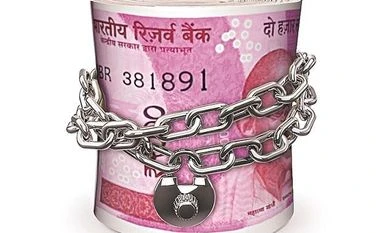
Rupee could weaken past 75 if Modi fails to win second term: Expert

Two of Asia's biggest emerging economies will soon elect leaders, and wagers are already being placed on their currencies. The consensus: Indonesia's rupiah will trump India's rupee.

Rupee
Rupee
Bloomberg
Last Updated : Feb 18 2019 | 3:51 PM IST
Two of Asia’s biggest emerging economies will soon elect leaders, and wagers are already being placed on their currencies. The consensus: Indonesia’s rupiah will trump India’s rupee.
 
It boils down to who retains power among the two pro-business incumbents. Opinion polls show Indonesian President Joko Widodo is set to win the April 17 vote, while Indian Prime Minister Narendra Modi’s position appears less secure following regional defeats for his party late last year.
 
“The rupiah offers a better risk-reward for investors than the rupee,” said Rainer Michael Preiss, an executive director at Taurus Wealth Advisors Pte. in Singapore. “With regard to Indonesia, our view is that consistency is good. If Modi doesn’t get re-elected, some people might think this is a negative and that could lead to more volatility in the rupee.”
 
The two nations are often compared as they offer high-yielding assets with large consumer bases. The duo is also vulnerable to changes in U.S. interest-rate policy.
 
Already a Winner
Judging by their performance this year, the rupiah is a clear favorite.
Indonesia’s stocks and bonds have lured almost $3 billion from overseas funds since Jan. 1, while Indian assets have seen net outflows of about $100 million.
 
The rupee could weaken past 75 per dollar if Modi failed to win a second term, said Prakash Sakpal, an economist at ING Groep NV in Singapore.

Morgan Stanley this month recommended selling the currency with a target of 74.6 via three-month non-deliverable forwards and said it expects more weakness before the election. The currency closed at 71.2275 on Feb. 15.
 
The terror attack that killed dozens of soldiers in India last week is also weighing on the market as investors ponder the scale of the government’s retaliation. Modi has vowed to give a befitting reply to Pakistan-based terror groups, which the government blamed for the worst assault on India since the ruling party swept to power in 2014.
 
The rupiah will probably hover around 14,000 per dollar for most of this year, little changed from current levels, though it could weaken to 14,300-14,400 before elections, Sakpal said.
 
A second term for Jokowi -- as the Indonesian president is popularly known -- could draw a flood of investors, Taurus’s Preiss said.
“I think many people are still underweight Indonesia,” he said. “It would be a powerful rally.”
 
Here are more comments from analysts:
Alexander Wolf, Hong Kong-based head of investment strategy for Asia at JPMorgan Private Bank:
Foreign investors have pinned their hopes on Modi, believing “this is the new India, it is progressive, it is pro-reform, it is going to take the right steps”
While Jokowi has had somewhat of a “mixed record” moving back and forth between market friendly and populous policies, “more orthodox policies” were seen under his administration
 
The rupiah would be a safer bet with a slight upside as it has advanced and the nation is more exposed to the Chinese growth cycle because of its exports of commodities
 
Dwyfor Evans, head of Asia-Pacific macro strategy at State Street Global Markets in Hong Kong:
The rupee faces near-term challenges based on the politics, but could surprise to the upside given the mandate the Reserve Bank of India has given for growth, which is a plus for inflows. The rupiah is attracting overseas interest again and Bank Indonesia recently signaled undervaluation, which augers well
 
“Jokowi is preferred over alternatives as he is supportive of a reformist agenda, although his achievements have been mixed. Modi is in a tougher position regarding reform as state governments in India assume a lot of power, which blunts the impact of New Delhi”
 
A victory by the opposition would undermine India assets as would a hung parliament as it implies reform gridlock; markets like Modi as he has clamped down on corruption and has overseen structural and operational improvements at the RBI and at the Treasury
 
Tuan Huynh, Singapore-based chief investment officer and head of discretionary portfolio management for emerging markets at Deutsche Bank Wealth Management:
 
Markets expect Jokowi and Modi to be re-elected, and that would mean a continuation of the reforms agenda. If there were any unexpected election results, the currency market could see higher volatility.
 
In the months leading to the election, weakness in the rupee is possible as the market is pricing in the election uncertainties. After the election, the focus would be on macro drivers such as the RBI’s policy, the U.S. Fed’s rate-hike paths and oil prices
The rupee and the rupiah would benefit this year from the slower Fed rate hikes, milder dollar strength and lower oil prices

One subscription. Two world-class reads.

Already subscribed? Log in

Subscribe to read the full story →
*Subscribe to Business Standard digital and get complimentary access to The New York Times

Smart Quarterly

₹900

3 Months

₹300/Month

SAVE 25%

Smart Essential

₹2,700

1 Year

₹225/Month

SAVE 46%
*Complimentary New York Times access for the 2nd year will be given after 12 months

Super Saver

₹3,900

2 Years

₹162/Month

Subscribe

Renews automatically, cancel anytime

Here’s what’s included in our digital subscription plans

Exclusive premium stories online

  • Over 30 premium stories daily, handpicked by our editors

Complimentary Access to The New York Times

  • News, Games, Cooking, Audio, Wirecutter & The Athletic

Business Standard Epaper

  • Digital replica of our daily newspaper — with options to read, save, and share

Curated Newsletters

  • Insights on markets, finance, politics, tech, and more delivered to your inbox

Market Analysis & Investment Insights

  • In-depth market analysis & insights with access to The Smart Investor

Archives

  • Repository of articles and publications dating back to 1997

Ad-free Reading

  • Uninterrupted reading experience with no advertisements

Seamless Access Across All Devices

  • Access Business Standard across devices — mobile, tablet, or PC, via web or app

Next Story