The EU will move towards closer defence ties today with more than 20 states signing a landmark pact that aims to boost cooperation after Brexit and counteract Russian pressure.
Similar efforts to deepen military links have been frustrated for decades, partly by Britain's fierce opposition to anything that might lead to a European army.
But Brexit and Russia's annexation of Crimea in 2014 has once again brought the need for a strong European security stance back into focus.
The permanent structured cooperation on defence agreement (PESCO), seeks to tighten defence between EU members and improve coordination in the development of new military hardware.
The agreement is part of efforts led by Germany and France to reboot the European Union after Britain's decision to leave, and follows the announcement in June of a 5.5-billion euro European Defence Fund.
The pact's backers say it will complement NATO, which will keep its primary role in defending Europe.
Spanish Defence Minister Maria Dolores de Cospedal hailed PESCO last week as "possibly the EU's most ambitious current project".
The notice of intent to be signed by defence ministers in Brussels pledges that countries will provide "substantial support" in areas including personnel, equipment, training and infrastructure" for EU military missions.
It also commits countries to "regularly increasing defence budgets in real terms" as well as devoting 20 percent of defence spending to procurement and two percent on research and technology.
"We've never come close to this before," an EU official said.
"We have more than 20 member states ... not just signing paper -- undertaking commitments in terms of spending on defence and joint projects."
PESCO could lead to the creation of a European military hospital or logistics hub, but will first focus on projects to develop new military equipment such as tanks or drones with the aim of harmonising weapons systems and eliminating gaps in capabilities.
France, Germany, Spain and Italy are among the nations signing up.
Britain and Denmark -- which have long had opt-outs on EU defence matters -- will not, along with Ireland, which is still considering the issue.
Participation in PESCO is voluntary and those who choose to sit out now can join later -- subject to approval by the early adopters.
Countries that are not in the EU can also take part in specific missions -- opening the way to possible participation by nuclear power Britain after it leaves the bloc in 2019 -- though they will have no role in decision-making.
In March ministers approved plans to create an embryonic military headquarters to coordinate EU overseas security operations.
Countries that sign up to PESCO will be subject to an annual review to make sure they stick to their commitments -- and could be thrown out if they do not.

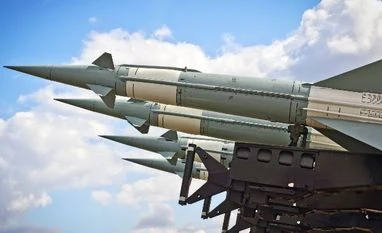 "To counter Russian pressure, EU pushes for closer defence cooperation")


 Connect with us on WhatsApp