US-based consortium head likely for Turkmen-India gas pipeline
Four partner-countries also keen on registering Tapi in New Jersey
Kalpana PathakShine Jacob Mumbai/New Delhi The $9-billion Turkmenistan-Afghanistan-Pakistan-India (Tapi) gas pipeline project is likely to see an America-based consortium leader.
"Considering the terrorism-torn terrain of the project, we are looking for a US-based company with experience in building and operating the cross-country pipeline. Moreover, in a meeting held last month, the partners were keen to register Tapi Ltd in a place like New Jersey," said an official source.
Despite several roadshows in Singapore, New York and London, global majors were not keen to participate as a consortium leader, due to the Turkmen government's decision not to give participating stakes for the companies in hydrocarbon fields. Last February, the Indian government had given its nod to creation of Special Purpose Vehicle and for the participation of state-run GAIL (India) Ltd in the project. GAIL would invest $5 million (Rs 30 crore). The project is expected to be operational by 2017-18. The Asian Development Bank is transaction advisor.
| CROSS-COUNTRY PIPING |
- Turkmenistan, Afghanistan, Pakistan & India are in talks with a US-based company to lead the New Jersey-based consortium
- The consortium leader would build and operate the project, arrange the funds, ensure the delivery of gas as well as security issues
- Despite several roadshows in Singapore, New York and London, global majors were not keen on participation as a consortium leader
- Petroleum Minister Veerappa Moily said once the consortium was chosen, the pipeline would be operational by 2017-18
|
"The consortium leader would build and operate the project, apart from arranging the funds and ensuring the delivery of gas, along with its security issues," the official added. GAIL has already struck an agreement with TurkmenGaz for importing 38 mscmd (million standard cubic metres a day) of natural gas through the pipeline for a 30-year period.
Meanwhile, there are disagreements between the Afghanistan and Pakistan governments over branches of the pipeline. According to reports, while Afghanistan wants a connection towards Peshawar, the preference of Pakistan is towards Lahore.
The 1,680-km pipeline will start from the South Yolotan-Osman field in Turkmenistan, passing through the troubled Herat, Helmand and Kandahar regions in Afghanistan and then via Quetta and Multan in Pakistan, ending at Fazilka (Punjab) in India.
By the initial agreement, of the 90 mscmd to be handled by the pipeline, India and Pakistan would get 38 mscmd each while Afghanistan would receive 14 mscmd. "Security is a big challenge. Once this is addressed, Tapi is only a matter of time. The pipeline will open the floodgates of Commonwealth of Independent States' gas to our country," said a senior research scholar from The India-Central Asia Foundation, New Delhi.
M Veerappa Moily, minister for petroleum and natural gas, had during Petrotech 2014 said once the consortium was chosen, the pipeline would be built by 2017-18. "By August 2020, India will have Tapi gas," he'd said.

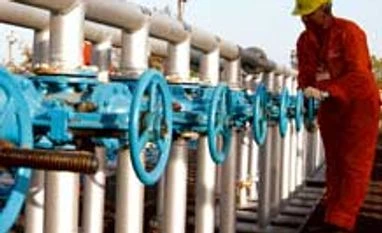 "US-based consortium head likely for Turkmen-India gas pipeline")


 Connect with us on WhatsApp