We need better supervision and not excessive regulations: Sanjeev Sanyal

In the paper, titled 'Risk vs Uncertainty: Supervision, Governance & Skin-in-the-Game', Sanyal has argued that a conventional top-down approach of regulation is the go-to solution for governments

Sanjeev Sanyal
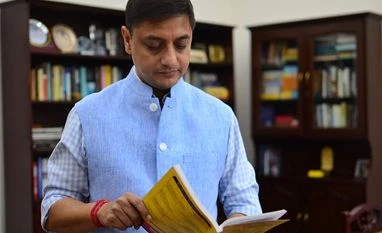
Principal Economic Advisor Sanjeev Sanyal
Arup Roychoudhury New Delhi
3 min read Last Updated : Feb 21 2020 | 1:26 AM IST
Principal Economic Advisor Sanjeev Sanyal on Thursday cautioned against excessively regulating and policing various sectors and called for fewer laws and rules with better supervision.

“We better supervision, and not more regulation. Our default approach in India, to solve any problem, is not to improve state capacity. Our default approach is to have more laws, more regulations. That is what we are arguing against,” Sanyal said during a media interaction while discussing a finance ministry discussion paper authored by him.

In the paper, titled ‘Risk vs Uncertainty: Supervision, Governance & Skin-in-the-Game’, Sanyal has argued that a conventional top-down approach of regulation is the go-to solution for governments to deal with problems, which is a risk-based approach. What gets overlooked is that systems need to be prepared for uncertainty, he says.

“It would be far better, therefore, to have a simpler regulatory framework supplemented by active and efficient supervision. The problem is that supervision demands active monitoring and accountability from the government department or regulatory body. This creates a perverse incentive to keep adding more top-down regulations regardless of their effectiveness,” Sanyal wrote.

Sanyal said there were many ways of being non-complaint. “Focus on having a simple system that works for most of the people, then supervise it properly. The more complex a system, the more rigid and opaque it becomes,” he said. Chief Economic Advisor Krishnamurthy Subramanian, who was also at the briefing, backed Sanyal’s arguments.

“When you have more regulation, it creates a false sense of complacency, and as a result supervision does not happen that much. Because you feel like you have taken care of all the problems through multiple rules. If you have lesser rules, you will supervise better,” Subramanian said.

Sanyal said recent episodes in the Indian economy, like the IL&FS saga, and the Punjab National Bank scam, would not have been avoided with more regulation. He said the system would have needed better supervision, not more regulation.

“The world of uncertainty is fundamentally different from the world of risk, and therefore, it requires policy tools that are also significantly different. However, the default policy response tends to be dominated by the risk-based approach,” Sanyal wrote in the paper.

“If you had a simple law and some degree of supervision, everything would be much better. If you have simpler rules, there are fewer things to comply with. In simple system everyone knows what it is,” he said.

Observing that a complex law leads to more discretion, Sanyal said, “We have tried to completely remove discretion by virtue of trying to create more and more regulation, which in fact, doesn’t help the case. In fact, as we make it more complex, more discretion, not less.” 

Another point here is no amount of complex regulation is going to solve the problem of ex-post resolution because you live in an uncertain world, things will go wrong in ways you never imagined, he said.

Irrespective of the quality of regulations and supervision, the fuzziness of a world of Uncertainty further requires systemic trust, he said. “This implies revitalizing old-fashioned responses such as corporate governance, transparency, ethics and skin-in-the- game. Moreover, there should be a greater acceptance of the likelihood that things will go wrong. No amount of ex-ante planning and rule-making can compensate for efficient ex-post resolution and contract enforcement,” he said.


One subscription. Two world-class reads.

Already subscribed? Log in

Subscribe to read the full story →
*Subscribe to Business Standard digital and get complimentary access to The New York Times

Smart Quarterly

₹900

3 Months

₹300/Month

SAVE 25%

Smart Essential

₹2,700

1 Year

₹225/Month

SAVE 46%
*Complimentary New York Times access for the 2nd year will be given after 12 months

Super Saver

₹3,900

2 Years

₹162/Month

Subscribe

Renews automatically, cancel anytime

Here’s what’s included in our digital subscription plans

Exclusive premium stories online

  • Over 30 premium stories daily, handpicked by our editors

Complimentary Access to The New York Times

  • News, Games, Cooking, Audio, Wirecutter & The Athletic

Business Standard Epaper

  • Digital replica of our daily newspaper — with options to read, save, and share

Curated Newsletters

  • Insights on markets, finance, politics, tech, and more delivered to your inbox

Market Analysis & Investment Insights

  • In-depth market analysis & insights with access to The Smart Investor

Archives

  • Repository of articles and publications dating back to 1997

Ad-free Reading

  • Uninterrupted reading experience with no advertisements

Seamless Access Across All Devices

  • Access Business Standard across devices — mobile, tablet, or PC, via web or app

Topics :IL&FS CrisisSanjeev SanyalRegulations

Next Story




