Indian School of Public Policy: Homegrown institute for policy wonks

ISPP is the country's first institute of its kind
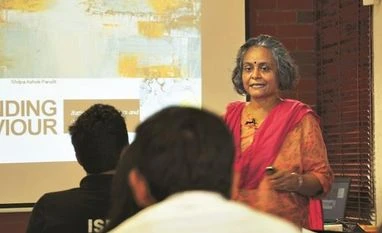
public policy, ISPP
Anjuli Bhargava New Delhi
5 min read Last Updated : Feb 22 2020 | 11:37 PM IST
As the Indian youth engage more with the politics of the day and begin to grasp the critical role public policy plays in determining one’s quality of life, there has been a rise in students heading West to join such prestigious institutes as the Harris School of Public Policy in Chicago, the Kennedy School at Harvard, the Blavatnik School of Government at Oxford University and Sciences PO in Paris. Closer home, the Lee Kuan Yew School of Public Policy is one of the more popular schools on their radar.

To give one example of the growing popularity of public policy, between 1988 and 2016, Harris School in Chicago had only 12 Indian students. In 2016, their number jumped to 18, followed by 24 in 2017 and 32 in 2018. Today, there are 45 Indian students studying at the institute.

Those who wanted to pursue the subject in India have had limited options. Courses in public policy are offered at institutions such as Jindal Global University, NLSIU, Bengaluru, and Xavier’s Mumbai. However, in most of these places, the courses were added as an afterthought. By and large, these institutions are known for other disciplines. Hence, for students who wanted to take a deeper dive into the subject, heading out of the country was the only real option, albeit an expensive one. Some students manage a part scholarship, but many take loans of anywhere between $100,000 and $150,000 for a two-year course.

The Center for Civil Society (CCS), a body that drives social change through policy action, started courses in public policy and governance in 1998. Meant for college and post-graduate students, the courses ranged from 3 days to six weeks. Over 10,000 students have done these programmes so far, many of them heading West later to study the subject at greater length.

But CCS founder Parth J Shah says that when they spoke to former students, many would complain of not being able to return to India. “Reinventing their lives here became impossible for many of our students,” explains Shah. Many would stay on to earn and pay back loans till their early 30s, and then find that they were “stuck” due to their circumstances.

That’s when the idea of setting up the Indian School of Public Policy (ISPP) began to take shape in Shah's mind. Besides, by 2018, CCS itself had completed 20 years and was looking at new avenues for growth.

Before setting up ISPP, Shah did some homework on global trends in higher education and came to three conclusions: First, he realised that specialisation was key, so any new school needed to offer public policy as its main offering, the same way that schools that specialised in medicine or management did. Second, that a public policy school could be asset light. The focus needed to be on technology and talent and highly qualified and competent teachers were more essential to success than a fancy campus. Shah realised that students needed to specialise even within public policy so that they were job ready once they finished the year-long programme.

Once the idea crystallised, Shah and CCS chairman Luis Miranda managed to secure the financial support of Nandan Nilekani, who had seen the lack of capacity in the system during his UIDAI tenure. Shubhashish Gangopadhyay, who had been advisor to former finance minister P Chidambaram, has been co-opted as the first dean. As of now, the board of the new school comprises Shah, Miranda and EdelGive Foundation CEO, Vidya Shah.

ISPP’s first batch of one-year residential programme began in 2018 with 63 students. Housed in Delhi’s Qutub Institutional Area, the programme is highly subsidised and currently costs Rs 7 lakh a year. (It is expected to go up to Rs 8 lakh from the next session, which begins this August.)

The students in the first batch range between 21 and 40 years in age. Many have work experience. The main faculty is visiting and the school has learning associates who bridge the gap between faculty and students. The founders argue that there is very high latent demand for policy professionals in India, but the supply has not been convincing enough for employers. From industry bodies to government outfits, think tanks, advocacy bodies, multilateral and international development organisations, consultancy firms and even companies like Uber, Ola, Amazon, many hire MBAs to do policy jobs.

“If they believed that policy graduates would handle that work at least as effectively and, in addition, bring policy perspectives to the table, they would grab that opportunity,” adds Shah.

The ISPP is working to put in place an effective placement plan for its students.

Viral Doshi, one of India’s best-known education consultants, says public policy has emerged as a popular postgraduate option in recent times. “By the time a student finishes school, they are not yet fully aware of what policy studies means. So I don’t see too many undergraduate students opting for it. But at the postgraduate level, the demand is growing,” he says. He estimates that between them, policy schools in the US get at least 200-300 postgraduate applications from India in a year. So, the scope is substantial.

But whether students will pick an Indian course over established foreign options remains debatable. ISPP wins on lower costs and a potential network for those keen to work in India. But it cannot complete with established public policy schools abroad when it comes to international exposure or their brand value. Going forward, the success of ISPP will depend on how it manages to position itself and the quality of its final product — the students.

One subscription. Two world-class reads.

Already subscribed? Log in

Subscribe to read the full story →
*Subscribe to Business Standard digital and get complimentary access to The New York Times

Smart Quarterly

₹900

3 Months

₹300/Month

SAVE 25%

Smart Essential

₹2,700

1 Year

₹225/Month

SAVE 46%
*Complimentary New York Times access for the 2nd year will be given after 12 months

Super Saver

₹3,900

2 Years

₹162/Month

Subscribe

Renews automatically, cancel anytime

Here’s what’s included in our digital subscription plans

Exclusive premium stories online

  • Over 30 premium stories daily, handpicked by our editors

Complimentary Access to The New York Times

  • News, Games, Cooking, Audio, Wirecutter & The Athletic

Business Standard Epaper

  • Digital replica of our daily newspaper — with options to read, save, and share

Curated Newsletters

  • Insights on markets, finance, politics, tech, and more delivered to your inbox

Market Analysis & Investment Insights

  • In-depth market analysis & insights with access to The Smart Investor

Archives

  • Repository of articles and publications dating back to 1997

Ad-free Reading

  • Uninterrupted reading experience with no advertisements

Seamless Access Across All Devices

  • Access Business Standard across devices — mobile, tablet, or PC, via web or app

Topics :public policy

Next Story



