Bank of Baroda Sept quarter pre-tax profit zooms 184% to Rs 1,127 crore

The bank did not factor in the effect of deferred tax assets for this quarter. It will, however, do it before March 2020.
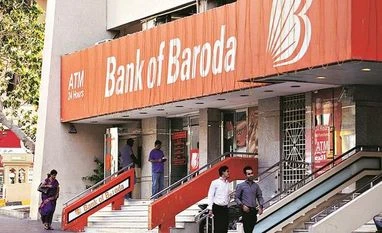
Bank of Baroda
Nidhi Rai Mumbai
2 min read Last Updated : Nov 09 2019 | 2:58 AM IST
Public sector lender Bank of Baroda’s profit before tax (PBT) rose 184 per cent to Rs 1,127 crore for the September 2019 quarter (Q2FY20).

This figure is for the amalgamated entity (standalone basis). The three-way merger of Bank of Baroda, Vijaya Bank, and Dena Bank came into effect during the previous quarter (Q1FY20).

The comparable PBT for Q2FY19 was Rs 397 crore. Net profit of the amalgamated entity rose 394.6 per cent to Rs 739 crore for Q2FY20. Net profit for Q2FY18 stood at Rs 149 crore.

Shares of Bank of Baroda closed at Rs 93.80 apiece on the BSE, down 2.39 per cent from the previous close.

The bank did not factor in the effect of deferred tax assets for this quarter. It will, however, do it before March 2020.

Net interest income (NII) increased by 10.1 per cent to Rs 7,028 crore in Q2, while net interest margin (NIM) improved by 19 bps to 2.81 per cent in Q2FY20 from 2.62 per cent last year.

Domestic advances grew 2 per cent to Rs 5.33 trillion in Q2, from Rs 5.23 crore a year ago. The increase was led by retail loans, which grew 16.2 per cent.

Our focus will be on retail loans. In the corporate segment, we will try to extend 80 per cent of our loans to AAA and AA-rated companies, said Murali Ramaswami, executive director of Bank of Baroda. Domestic deposits increased by 4 per cent year-on-year to Rs 7.83 crore as on September 30, 2019. The share of low-cost Current Account Savings Account (CASA) deposits stood at 37.9 per cent as on September 30, 2019. Gross non-performing assets (GNPA) stood at Rs 69,969 crore (10.25 per cent), while the net NPA ratio stood at 3.91 per cent. Loans to two non-banking financial companies (NBFCs), one textile and one plastic company, slipped in the quarter. Exposure to these two NBFCs was Rs 2,000 crore, said S L Jain, executive director of Bank of Baroda.

Jain added that the bank’s total real estate exposure was at Rs 15,000 crore and the exposure to troubled mortgage lender Dewan Housing Finance Corporation or DHFL stood at close to Rs 2,000 crore. Capital adequacy ratio was at 12.98 per cent, and CET-1 at 9.84 per cent in Q2.

One subscription. Two world-class reads.

Already subscribed? Log in

Subscribe to read the full story →
*Subscribe to Business Standard digital and get complimentary access to The New York Times

Smart Quarterly

₹900

3 Months

₹300/Month

SAVE 25%

Smart Essential

₹2,700

1 Year

₹225/Month

SAVE 46%
*Complimentary New York Times access for the 2nd year will be given after 12 months

Super Saver

₹3,900

2 Years

₹162/Month

Subscribe

Renews automatically, cancel anytime

Here’s what’s included in our digital subscription plans

Exclusive premium stories online

  • Over 30 premium stories daily, handpicked by our editors

Complimentary Access to The New York Times

  • News, Games, Cooking, Audio, Wirecutter & The Athletic

Business Standard Epaper

  • Digital replica of our daily newspaper — with options to read, save, and share

Curated Newsletters

  • Insights on markets, finance, politics, tech, and more delivered to your inbox

Market Analysis & Investment Insights

  • In-depth market analysis & insights with access to The Smart Investor

Archives

  • Repository of articles and publications dating back to 1997

Ad-free Reading

  • Uninterrupted reading experience with no advertisements

Seamless Access Across All Devices

  • Access Business Standard across devices — mobile, tablet, or PC, via web or app

Topics :Bank of Baroda

Next Story



