Hike rates but don't choke liquidity, SBI chief to RBI
The banking regulator has announced a slew of measures in past few days to curb liquidity, address foreign exchange rate volatility
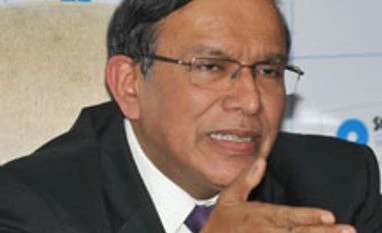
BS Reporter Kolkata Almost a year ago, in an annual banking conclave, State Bank of India’s (SBI) chairman Pratip Chaudhuri had raised a stir by demanding elimination of the cash reserve ratio (CRR). This year he chose the same event to send another message to the Reserve Bank of India (RBI): “Hike rates if you want, but do not choke liquidity.”
RBI has announced a slew of measures in the past few days to curb liquidity and address the foreign exchange rate volatility. The rupee has been one of the Asia’s worst performing currencies this year and has fallen 10 per cent against the dollar since the start of May. “About a year back, in this event, I raised a debate that the CRR should be abolished. I am glad that the debate has caught on. It has also found its reflection in the monetary policy making and since that day to today the CRR stands reduced from six per cent to four per cent,” Chaudhuri said in his speech at the 10th annual banking conclave, organised by the Federation of Indian Chambers of Commerce and Industry, here on Wednesday.
While Chaudhuri noted the current situation probably demands tightening of money supply, he feels it should be done through interest rate hikes. “RBI has made it very clear that at the current moment their priority number one is to stabilise the currency. One can debate whether that is useful for the economy. But that is their mandate...My advice would be if you have to press this button do it without any cover, do it in a frank, fair and transparent manner. If it (money supply) has to be tightened, please increase interest rate, but do not choke liquidity,” Chaudhuri said.
On Tuesday, RBI imposed new restrictions on the commercial banks' access to cash. Banks will now be permitted to borrow under the liquidity adjustment facility (LAF) only up to 0.5 per cent (compared to one per cent earlier) of their net demand and time liabilities (NDTL) at the benchmark interest rate of 7.25 per cent.
Earlier, RBI had increased the bank rate by 200 basis points and the marginal standing facility (MSF) to 10.25 per cent from 8.25 per cent.
"Today, on paper the repo rate is 7.25 per cent but there are limitations. The real repo rate, I feel, is 10.25 per cent. It does not help anybody to camouflage the repo rate. If the repo rate has to be taken to 10.25 per cent so be it. But do it in an open manner. But RBI has chosen to choke liquidity. We request them to make it more expensive,” Chaudhuri said.
“We all hope and pray that these measures are strictly temporary and are rolled back at the earliest opportunity,” he added.
Chaudhuri, however, said that the tight liquidity situation is unlikely to prompt banks in increasing their lending rates. “Banks' deposit and loan rates follow a different dynamics. Yes, there is tightness in liquidity, (but) many people are encashing their investments in liquid mutual funds and coming to banks,” he said.
SBI has received around Rs 5,000-6,000 crore in the last few days as redemption proceeds of liquid mutual funds.

 "Hike rates but don't choke liquidity, SBI chief to RBI")

