
India's financial system well cushioned amidst pandemic: RBI report
Banks' gross NPAs may jump to 8.1-9.5% by Sept 2022 from 6.9% in Sept 2021, says RBI in financial stability report
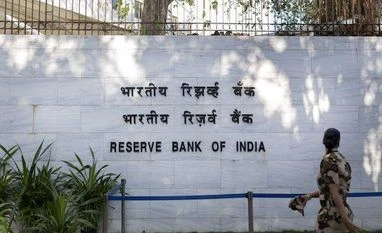 "India's financial system well cushioned amidst pandemic: RBI report")
WebinarsNew
Deep DiveNew
Explore Business Standard
Banks' gross NPAs may jump to 8.1-9.5% by Sept 2022 from 6.9% in Sept 2021, says RBI in financial stability report
Financial institutions in India have remained resilient amidst the pandemic and stability prevails in the financial markets, cushioned by policy and regulatory support, according a central bank financial stability report.
"Balance sheets of banks remain strong and capital and liquidity buffers are being bolstered to mitigate future shocks, as reflected in the stress tests presented in this report," Reserve Bank of India Governor Shaktikanta Das wrote in his foreword of the report.
The Financial Stability Report is published bi-annually by the RBI on behalf of the Financial Stability and Development Council, an umbrella group of regulators which gives an overview of the health of India's financial system.
"While the asset quality of banks showed improvement, with the gross non-performing assets (GNPA) and net NPA (NNPA) ratios declining to 6.9% and 2.3%, respectively, their slippage ratio inched up in September 2021," the report said.
The report projects banks' GNPAs rising to 8.1% of total assets by September 2022 from 6.9% in September 2021 under a baseline scenario and to 9.5% under a severe stress scenario.
These projections are however more optimistic than those made in July where GNPAs under a baseline scenario were expected to be close to 10% in March 2022.
"The stress tests show that all banks would be able to comply with the minimum capital requirements even under severe stress scenarios," the report added.
The capital to risk-weighted assets ratio (CRAR) of scheduled commercial banks rose to a new peak of 16.6% and their provisioning coverage ratio (PCR) stood at 68.1% in September 2021, the report said.
"As the economy recovers and credit demand rises, banks will need to ensure availability of sufficient capital to support credit growth," the report said.
It however warned non-bank finance companies and urban co-operative banks to be mindful of frailties on the liquidity front and ensure robust asset-liability management, apart from improving the quality of their credit portfolios.
"Stress tests indicate that a significant number of NBFCs would be adversely impacted in the event of liquidity shocks," the report said.
(Only the headline and picture of this report may have been reworked by the Business Standard staff; the rest of the content is auto-generated from a syndicated feed.)
First Published: Dec 29 2021 | 6:29 PM IST


 Connect with us on WhatsApp