Inflation limiting scope for easing, says Rajan
RBI wants review of banks' company exposure, sees rising asset quality stress
BS Reporter Mumbai The Reserve Bank of India (RBI) on Monday said high and stubborn inflation was limiting the scope for monetary policy to boost growth. This was still weak, though the outlook for the economy had improved, with export growth regaining momentum, it said.
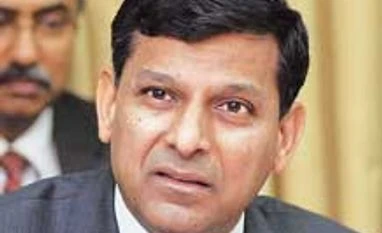
The comment was made by RBI Governor Raghuram Rajan in the foreword to its Financial Stability Report, released on Monday.
Rajan, after taking charge in September, raised the policy rate by 50 basis points (bps) to fight rising prices but paused in the December review meeting, surprising the markets. "The outlook for the economy has improved, with export growth regaining momentum, but growth is still weak. The challenges of containing inflationary pressures limit what monetary policy can do," Rajan said.
(THE DENT IN ASSET QUALITY) | RBI SAYS |
- Volatility in financial markets will depend on the pace of US tapering
- Delay in tapering helped India but macroeconomic adjustment is far from complete, with high inflation amidst a growth slowdown
- Fall in domestic savings and high fiscal deficit are major concerns
- Corporate sector shifting asset composition towards financial investments
- Housing prices and outstanding loans of housing finance companies have grown rapidly
- Risks to banking sector have increased further
- Failure of a major corporate could trigger a contagion in the banking system
- Banks’ gross NPA and restructured standard advances ratio have increased
- Five sectors account for 53% of banks’ stressed advances
- Asset quality to worsen if adverse macro conditions persist
|
Commenting on the coming general elections as a potential source for uncertainty, Rajan said stability of the new government would be a positive. "With confidence in the financial system still fragile, six years into the crisis, policy certainty is something investors look for in the current environment," he added.
On the external front, however, RBI showed confidence on bringing the current account deficit below three per cent of gross domestic product (GDP) this financial year, from a historic high of 4.8 per cent in the previous year and said foreign exchange reserves were adequate and fiscal consolidation was in progress. The biggest concern of the report emanates from rising stress in the banking system, with risks to the sector having increased during March-September. RBI also highlighted that the industrial segment accounted for the highest amount of loan restructuring and having the most stress.
"Though agriculture recorded the highest gross non-performing asset (GNPA) ratio at 5.5 per cent as at the end of September 2013 followed by industries at 4.9 per cent, industries recorded the highest share in restructured standard advances as per cent of total advances at 10.9 per cent as at the end of September 2013," RBI said.
As a result, the industrial segment has the highest share of stressed advances (NPA plus restructured loans) in banks' loan portfolios at 15.9 per cent as at the end of September 2013, followed by services at 7.6 per cent.
RBI has pointed to five sectors that have a high level of stressed advances: Infrastructure, iron & steel, textiles, aviation and mining. These five together contribute around 24 per cent of total advances of banks and account for around 51 per cent of their total stressed advances.
Risks from the ever-growing pool of corporate stressed loans has prompted the regulator to think about a relook at the existing single and group borrower limits.
"A review of the extant single and group borrower exposure limits would considerably enhance the stability of the banking sector," RBI said after a detailed impact analysis, and looking at international best practices. At present, a bank can take single borrower exposure up to 25 per cent of the total bank capital and up to 55 per cent for group exposure.
The macro stress tests conducted by the central bank indicate that if adverse macroeconomic conditions persist, the credit quality of commercial banks could deteriorate further and the present level of provisions may not be sufficient to meet the expected losses under heightened adverse macroeconomic conditions. However, if conditions improve, the present trend in credit quality may reverse during the second half of 2014-15, RBI said.

 "Inflation limiting scope for easing, says Rajan")


 Connect with us on WhatsApp