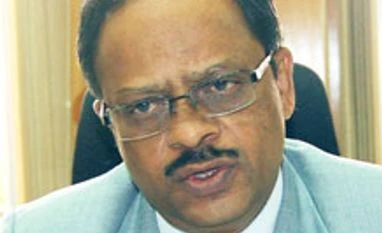
Lending cap won't hurt as focus is now on retail loans: Sanjay Arya
Interview with Executive director, United Bank of India
Somasroy Chakraborty Kolkata United Bank of India (UBI) is under stress with mounting losses, deteriorating credit quality and a low capital adequacy ratio. But the bank's senior management remains confident of emerging out of this crisis sooner than later. The lender has stepped up its loan recovery efforts, set an ambitious target of reducing non-performing assets by at least Rs 2,000 crore and is keeping tight control on expenses. The government has put the two executive directors –
Sanjay Arya and Deepak Narang – in charge of the bank, following the resignation of its chairperson Archana Bhargava earlier this month. In an interview with Somasroy Chakraborty, Arya shares details on the bank's strategy to improve earnings and cut bad loans. Edited excerpts:
There has been a sharp increase in bad loans, which has affected UBI's earnings in recent quarters. What went wrong? The situation is not as grave as is being portrayed. The bank continues to remain profitable at the operating level. We are confident that, even in the current (January-March) quarter, we will make operating profit in line with past performance. To me, operating profit mirrors the health of a bank, since it reflects the operating efficiencies. Our earnings were affected because of high loan loss provisions. We are making efforts to improve our loan recovery, which will result in better earnings performance.
What will contribute to the growth in your operating profit? We have taken certain steps to augment our net interest income and reduce operating expenses. These two components significantly influence a bank's operating profit. We have reduced our retail term deposit rate, which will help us save on interest cost. We have also increased our base rate. Our low-cost current account savings account deposit base is one of the best in the sector, and we aim to improve it further to 40 per cent. We have been avoiding bulk deposits. Our bulk deposit base is now reduced to Rs 17,000 crore compared to Rs 24,000 crore in September 2013. These efforts, I believe, will help us grow our net interest income. On the expense side, we are keeping a tight leash and curtailing discretionary spends. For instance, we are keeping a tight budget for tours and travels. We are confident of making a turnaround in our performance soon.
The Reserve Bank of India (RBI) has restricted the loan sanctioning power of the bank to Rs 10 crore. Will this prevent the bank in growing its net interest income? The current economic environment is uncertain and the situation is not offering many opportunities for gainful lending. So, anyway we are lending cautiously. Also, there is a change in our philosophy, and we have decided to finance the retail segment aggressively. The share of retail loans in our total advances is currently at 10 per cent, and we want to improve it to 16-17 per cent. The growth in retail advances will be driven by home loans. It is safe and the value of the collateral normally increases even as the outstanding loan amount decreases. The capital adequacy requirement is also low and it will allow us to use our capital more efficiently. To answer your question, I don't think the lending restrictions will come in our way because our focus has now shifted to retail loans.
You have seen fresh slippages in small loan accounts. How has been the performance of large corporate loans?
The slowdown has also affected some of the large accounts, especially in the infrastructure segment. Slippages have also occurred in small loans in the agriculture and MSME (micro, small and medium enterprise) segments. We are cautious in lending to these sectors but if we find good borrowers we continue to finance them.
What steps have been initiated to improve credit quality?
Our objective is to restrict fresh slippages and recover money from existing non-performing accounts. Prevention of fresh slippages will put us back in profit, while recoveries will add further strength to our earnings. We (the senior management) have spoken to all staff members emphasising the need to step up recovery. Each general manager has been assigned two to three regions to monitor recovery performances on a daily basis. We are giving them daily targets. We have also introduced a one-time settlement scheme for loans up to Rs 10 lakh to facilitate easy repayment.
The scheme will continue till March 31 and based on the performance we will review if there is a need to extend it further.

 "Lending cap won't hurt as focus is now on retail loans: Sanjay Arya")


 Connect with us on WhatsApp