Micro lenders seek extension of credit guarantee scheme in Union Budget

Seek allocation of Rs 15,000 cr for FY23, of which at least 75% should be earmarked for small and mid-size MFIs
Microfinance
Subrata Panda Mumbai
2 min read Last Updated : Jan 05 2022 | 11:57 PM IST
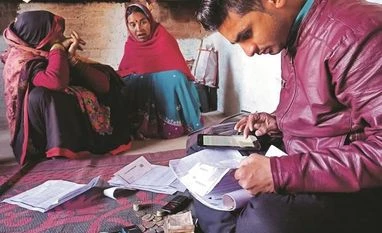
Sa-Dhan, the self-regulatory organisation for Microfinance Institutions (MFIs), has sought an extension of the credit guarantee scheme till the next fiscal year (FY23) with an allocation of Rs 15,000 crore, at least 75 per cent of which should be earmarked for small and mid-size MFIs. This is a part of their recommendation to Finance Minister Nirmala Sitharaman ahead of the upcoming Union Budget.

The finance minister had announced a Rs 7,500 crore credit guarantee scheme for the ongoing fiscal year (FY22) for MFIs as economic relief from the pandemic.
While the credit guarantee scheme has helped MFIs during Covid, the sector is still facing challenges, especially related to funding. P Satish, the executive director of Sa-Dhan, said, "the sector still faces challenges in terms of higher credit costs and needs access to low-cost long-term funds”.

Since the pandemic has impacted MFIs’ ability to attract new investment, they have also asked for support with subordinated debt of five to seven year tenure. A subordinated debt is a type of loan that is repaid after all other corporate debts and loans have been repaid, in case the borrower has defaulted.

Further, the organisation has asked the finance minister to allow the issuance of tax-free social bonds for five years by Small Industries Development Bank of India (SIDBI) and National Bank for Agriculture and Rural Development (NABARD) to exclusively provide debt/equity funding to MFIs that operate in semi-urban or rural areas.

“Social Bonds will have a high multiplier effect if fiscal incentive is provided to ensure higher individual and corporate participation,” Sa-Dhan said.

It has also sought a microfinance development fund of Rs 1,000 crore to be set up by NABARD to support the not-for-profit MFIs, with grants as well as revolving funds or refinance support. Additionally, it has sought relaxation in the minimum subscription amount for individuals investing in Alternative Investment Fund (AIF) from Rs 1 crore to Rs 500,000 for AIFs aimed at the social sector, especially microfinance, agriculture, water, sanitation, among others.

The self-regulatory body has also asked the government to relax certain Income Tax norms for MFIs working as corporations.

According to the CRIF MicroLend report, the microfinance sector has seen recovery in the September quarter (Q2 FY22) after the Covid second wave-led devastation in Q1. 

One subscription. Two world-class reads.

Already subscribed? Log in

Subscribe to read the full story →
*Subscribe to Business Standard digital and get complimentary access to The New York Times

Smart Quarterly

₹900

3 Months

₹300/Month

SAVE 25%

Smart Essential

₹2,700

1 Year

₹225/Month

SAVE 46%
*Complimentary New York Times access for the 2nd year will be given after 12 months

Super Saver

₹3,900

2 Years

₹162/Month

Subscribe

Renews automatically, cancel anytime

Here’s what’s included in our digital subscription plans

Exclusive premium stories online

  • Over 30 premium stories daily, handpicked by our editors

Complimentary Access to The New York Times

  • News, Games, Cooking, Audio, Wirecutter & The Athletic

Business Standard Epaper

  • Digital replica of our daily newspaper — with options to read, save, and share

Curated Newsletters

  • Insights on markets, finance, politics, tech, and more delivered to your inbox

Market Analysis & Investment Insights

  • In-depth market analysis & insights with access to The Smart Investor

Archives

  • Repository of articles and publications dating back to 1997

Ad-free Reading

  • Uninterrupted reading experience with no advertisements

Seamless Access Across All Devices

  • Access Business Standard across devices — mobile, tablet, or PC, via web or app

Topics :MFIsMicrofinance

Next Story



