Pandemic concerns may have prompted RBI to go slow on liquidity operations

It was widely expected RBI would announce a three-day reverse repo auction of Rs 2 trn, rolling over last such auction conducted on Monday; that did not happen during market hours

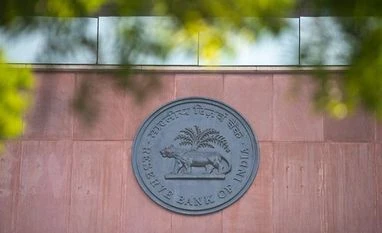
RBI, Reserve Bank of India
Photo: Shutterstock
Anup Roy Mumbai
3 min read Last Updated : Jan 14 2022 | 12:09 AM IST
The Reserve Bank of India (RBI) on Thursday positively surprised the bond markets by going slow on its liquidity absorption mode, possibly indicating its readiness to not rush towards normalisation amid a pandemic scare.

Generally, the central bank has been rolling over its variable rate reverse repo (VRRR) auctions in order to remove excess liquidity from the banking system. It was widely expected that the RBI would be announcing a three-day reverse repo auction of Rs 2 trillion, rolling over the last such auction conducted on Monday.

The central bank did not do so during the market hours. But after the market closed, it announced a 14-day VRRR of Rs 5 trillion. This was lower than the central bank’s expressed plan of draining the system by Rs 8 trillion through VRRR by this week.

The central bank had on December 31 conducted a 14-day VRRR auction of Rs 7.5 trillion, but the banks parked only Rs 2.67 trillion in that auction.

“Both the 14-day amount and no communication on the 3 day VRRR came as a pleasant surprise to the market. It seems the RBI has now taken a backseat on monetary tightening due to the prevailing covid situation,” said Devendra Dash, senior vice president at AU Small Finance Bank.

“This means the cut-off of 3.99 per cent is not near guaranteed in VRRR auctions,” Dash said. Therefore, short-term money market rates would likely dip in the coming days on RBI liquidity support.

Soumyajit Niyogi, associate director of India Ratings and Research observed that in the environment of long pause on policy rate, the internal liquidity management and market operations of the RBI is assuming a critical central role.

“Impounded system liquidity, rather than permanent sterilisation, gives comfort and flexibility to the banks to operate amidst volatile environments without compromising with the stability in the financial system,” Niyogi said.

Like other global central banks, the Indian central bank is also normalising its pandemic-induced extraordinarily loose monetary policy in stages.

In October, it stopped direct bond purchases, thereby halting its infusion of fresh liquidity in the system. Now, it is draining the system liquidity through VRRR auctions. By choosing a variable rate for reverse repo auction, rather than the fixed rate, the central bank has pushed up the de-facto reverse repo rate to near the repo rate of 4 per cent.

This has resulted in bond yields firming up, pushing the interest rate in the economy. Analysts expect a formal reverse repo hike announcement on the February 9 monetary policy review, while a repo rate hike could come sometime in the second half of this calendar.

But clearly, the central bank does not want to hurry on a rate tightening as the economy has still not registered a healthy recovery. The Index of Industrial production (IIP) grew at its slowest pace since Mar-21 by 1.4 per cent year on year in Nov-21, from 4 per cent in October.

Meanwhile, inflation also quickened to a five month high of 5.59 per cent in December, making the job complicated for the central bank.

One subscription. Two world-class reads.

Already subscribed? Log in

Subscribe to read the full story →
*Subscribe to Business Standard digital and get complimentary access to The New York Times

Smart Quarterly

₹900

3 Months

₹300/Month

SAVE 25%

Smart Essential

₹2,700

1 Year

₹225/Month

SAVE 46%
*Complimentary New York Times access for the 2nd year will be given after 12 months

Super Saver

₹3,900

2 Years

₹162/Month

Subscribe

Renews automatically, cancel anytime

Here’s what’s included in our digital subscription plans

Exclusive premium stories online

  • Over 30 premium stories daily, handpicked by our editors

Complimentary Access to The New York Times

  • News, Games, Cooking, Audio, Wirecutter & The Athletic

Business Standard Epaper

  • Digital replica of our daily newspaper — with options to read, save, and share

Curated Newsletters

  • Insights on markets, finance, politics, tech, and more delivered to your inbox

Market Analysis & Investment Insights

  • In-depth market analysis & insights with access to The Smart Investor

Archives

  • Repository of articles and publications dating back to 1997

Ad-free Reading

  • Uninterrupted reading experience with no advertisements

Seamless Access Across All Devices

  • Access Business Standard across devices — mobile, tablet, or PC, via web or app

Topics :RBIbond market

Next Story




