RBI may wait for a few more months to raise interest rates, says survey

India has only recently begun to recover much of its lost ground and New Delhi's latest budget was modestly stimulative compared with expectations
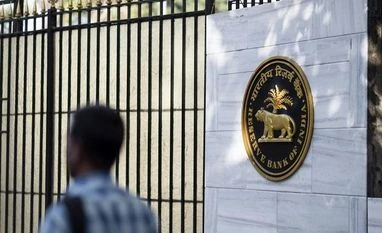
RBI
RBI ( Photo: Bloomberg)
Reuters
4 min read Last Updated : Feb 07 2022 | 9:28 AM IST
Faced with relatively low inflation amid a global surge, the Reserve Bank of India will still wait at least a few more months before it joins other central banks in raising interest rates following the pandemic, a Reuters poll found.

Among the hardest-hit emerging economies from shutdowns and disruptions to business by COVID-19, India has only recently begun to recover much of its lost ground and New Delhi's latest budget was modestly stimulative compared with expectations.
Indeed, the RBI has been notably dovish, having kept its key repo rate at a record low of 4.00% for nearly two years.
 
Respondents in a Feb. 2-4 Reuters poll were closely split on the timing of the next rise, with slightly more than half, 17 of 32, expecting 25 basis point rise to 4.25% in April.

Among the remaining 15, 13 were nearly split between June and August. While only one economist said it would come as early this month, the other said October of this year.
 
That would follow a widely-expected interest rate rise from near-zero in March by the U.S. Federal Reserve, which is grappling with the highest consumer inflation since 1982.

Economists expect at least another two to follow, while markets are pricing in four more.

Nearly two-thirds of respondents in the latest poll, 24 of 38, see one more RBI rate rise by year-end, little changed from a poll taken last month.

But the pressure is rising for India's central bank - well behind peers like Brazil, which has already raised its key interest rate by 875 basis points since March 2021 - to begin tightening.

"Ideally, the RBI should have been more worried about containing inflation, but it has been more worried about lifting growth. It is possibly behind the curve. But at this point, it's very difficult to say what is right or what is wrong," said Kunal Kundu, India economist at Societe Generale.
 
"Post the budget announcement and given a global environment where everybody is normalising monetary policy, I don't think the RBI has many options left on the table." The RBI was forecast to raise the reverse repo rate - the rate at which it borrows from banks - to 3.55% from 3.35% at its meeting on Thursday, narrowing the corridor between it and the repo rate to 45 basis points.
India's central bank has rescheduled its monetary policy committee meeting, delaying it by a day to Feb. 8-10, it said in a statement on Sunday, citing a public holiday in the state of Maharashtra to mourn the death of Bollywood singer Lata Mangeshkar.

Respondents were divided about what would be the biggest driver for RBI rate rises this year.
 
About half of economists responding to an additional question, 15 of 31, said combating high inflation would steer its moves. Another 12, or 39% of respondents, said playing catch-up with the Fed. The rest said the RBI would tighten policy to prop up the rupee.

"The RBI would not only have to manage the delicate growth-inflation trade off but also find answers to the vexed question of fiscal dominance of monetary policy and prepare itself for any spillovers from accelerated Fed tightening," noted Samiran Chakraborty, chief economist for India at Citi.

Inflation is expected to remain below the RBI's upper tolerance limit of 6% until at least 2024, according to the poll, but trend above the medium-term target of 4%.

Asked if the RBI was behind the curve with its monetary policy strategy, 19 of 29 said it was not, while the rest said it was.

One subscription. Two world-class reads.

Already subscribed? Log in

Subscribe to read the full story →
*Subscribe to Business Standard digital and get complimentary access to The New York Times

Smart Quarterly

₹900

3 Months

₹300/Month

SAVE 25%

Smart Essential

₹2,700

1 Year

₹225/Month

SAVE 46%
*Complimentary New York Times access for the 2nd year will be given after 12 months

Super Saver

₹3,900

2 Years

₹162/Month

Subscribe

Renews automatically, cancel anytime

Here’s what’s included in our digital subscription plans

Exclusive premium stories online

  • Over 30 premium stories daily, handpicked by our editors

Complimentary Access to The New York Times

  • News, Games, Cooking, Audio, Wirecutter & The Athletic

Business Standard Epaper

  • Digital replica of our daily newspaper — with options to read, save, and share

Curated Newsletters

  • Insights on markets, finance, politics, tech, and more delivered to your inbox

Market Analysis & Investment Insights

  • In-depth market analysis & insights with access to The Smart Investor

Archives

  • Repository of articles and publications dating back to 1997

Ad-free Reading

  • Uninterrupted reading experience with no advertisements

Seamless Access Across All Devices

  • Access Business Standard across devices — mobile, tablet, or PC, via web or app

Topics :Reserve Bank of IndiaInterest rate hike

Next Story



