Only card firms, banks to keep card details, others must purge data: RBI

Tokenisation is used in online transactions where the actual card details keyed in are replaced by random digits
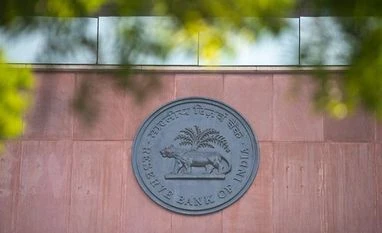
RBI, Reserve Bank of India
Photo: Shutterstock
Anup Roy Mumbai
3 min read Last Updated : Sep 08 2021 | 11:36 AM IST
The Reserve Bank of India (RBI) on Tuesday refused to extend its deadline for card tokenisation beyond the agreed January 1, 2022 date, scrapping single click purchases but still allowing customers to not go through the hassle of typing in card details for every transaction. 

Tokenisation is used in online transactions where the actual card details keyed in are replaced by random digits. Since the card details will not be saved with the merchants, except for the source banks and card issuers (such as Rupay, Visa, and Mastercard) the leakage of card details will be prevented as the database of the merchant will have random numbers instead of card details. 

However, the RBI also extended a service that will enable the user not to key in 16-digit card numbers and other details if she chooses so. Only the bank or the card issuer can enable or disable that service, and not the payment aggregators or the merchants. The card details saved with the payment aggregators and merchants will have to be scrapped.   

Saving of card details is called card on file (CoF), and the banks and card networks can do the tokenisation as token service providers (TSP). This Card-on-File Tokenisation (CoFT) service is being introduced by the RBI, enabling customer convenience while maintaining top level security.   

CoFT, “while improving customer data security, will offer customers the same degree of convenience as now. Contrary to some concerns expressed in certain sections of the media, there would be no requirement to input card details for every transaction under the tokenisation arrangement,” the RBI said in a separate statement. 

The tokenisation has to be done based on customer consent, to be validated through an additional factor authentication, the RBI said in its notification.  

“With effect from January 1, 2022, no entity in the card transaction / payment chain, other than the card issuers and / or card networks, shall store the actual card data,” the central bank said in a statement, adding, “any such data stored previously shall be purged”.  

With this, the RBI extended the tokenisation mandate to every device that connects with the Internet, including mobile phones, tablets, laptops, desktops, wearables (wrist watches, bands, etc.), Internet of Things (IoT) devices, etc.   

This will come as a blow to payment aggregators who were lobbying for keeping card details saved with them or in the merchant sites they serve. One-click purchases will become difficult after this, as the customer will have to still provide a one-time password.   

However, for transaction tracking, or reconciliation purposes, entities can store the last four digits of the actual card number and card issuer’s name – “in compliance with the applicable standards.”  

The RBI also made card networks responsible for “complete and ongoing compliance with the above by all entities involved".  

The payments aggregators and gateways had argued that the industry follows the best practice and the RBI can always demand stricter norms, and the highest standards. They had demanded the RBI should let PCI DSS Level 1-certified merchants to store the card details. Level 1 is the highest standard available under PCI DSS, or Payment Card Industry Data Security Standard. 

One subscription. Two world-class reads.

Already subscribed? Log in

Subscribe to read the full story →
*Subscribe to Business Standard digital and get complimentary access to The New York Times

Smart Quarterly

₹900

3 Months

₹300/Month

SAVE 25%

Smart Essential

₹2,700

1 Year

₹225/Month

SAVE 46%
*Complimentary New York Times access for the 2nd year will be given after 12 months

Super Saver

₹3,900

2 Years

₹162/Month

Subscribe

Renews automatically, cancel anytime

Here’s what’s included in our digital subscription plans

Exclusive premium stories online

  • Over 30 premium stories daily, handpicked by our editors

Complimentary Access to The New York Times

  • News, Games, Cooking, Audio, Wirecutter & The Athletic

Business Standard Epaper

  • Digital replica of our daily newspaper — with options to read, save, and share

Curated Newsletters

  • Insights on markets, finance, politics, tech, and more delivered to your inbox

Market Analysis & Investment Insights

  • In-depth market analysis & insights with access to The Smart Investor

Archives

  • Repository of articles and publications dating back to 1997

Ad-free Reading

  • Uninterrupted reading experience with no advertisements

Seamless Access Across All Devices

  • Access Business Standard across devices — mobile, tablet, or PC, via web or app

Topics :RBICardsOnline transaction

Next Story



