Why is the RBI interested in digital currency but wary of bitcoins?

For a digital currency to be popular, internet penetration as well as digital literacy need to be greatly improved, say experts
Reserve Bank of India
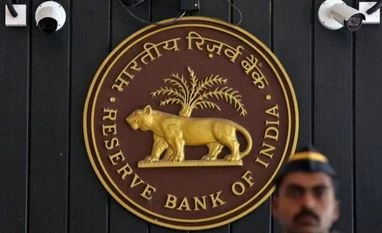
FILE PHOTO: A security personnel member stands guard at the entrance of the Reserve Bank of India (RBI) headquarters in Mumbai | Photo: Reuters
Mayank Jain
Last Updated : Aug 30 2018 | 9:09 PM IST
Why is the RBI interested in issuing its own digital currency?

The Reserve Bank of India (RBI) first proposed the idea of a central bank-backed digital currency in April this year on the sidelines of the monetary policy meeting. The banking regulator said that with the advances in the payments industry and digital tokens, central banks around the world are discussing the possibility of introducing digital currency with legal backing. To this end, the regulator set up an interdisciplinary group to study and offer guidance. The group was supposed to have submitted its report by June-end 2018.

What is the benefit of a fiat digital currency over paper currency? 

In its policy advisories, the RBI has stated that virtual currencies backed by central banks could potentially offer long term economic benefits. A key benefit is the savings on the cost of producing and handling paper and metal currency. In its annual report, the regulator said that the emergence of private digital tokens had changed the landscape of digital payments. 

What is the progress on this front? Who is in-charge of the supporting research?

It is not known if the report of the group constituted by the central bank was submitted on time or not. However, in its recently released annual report, the banking regulator said it has set up a group to study the feasibility of a fiat digital currency and provide guidance to the bank. 


Apart from the interdisciplinary group, the bank also formed a new unit to keep track of technologies like blockchain, cryptocurrency and artificial intelligence. Reports indicate that a chief general manager has already been identified to lead the group and provide policy recommendations to the RBI. 

The Institute for Development and Research in Banking Technology, an RBI arm, is also said to be preparing a model blockchain for trials. The institute takes care of the central banks’ technology research needs and comes up with papers and policy guidance on emerging technologies.

What are the apprehensions? 

There are fears in the industry about the possibility of fraud and theft of purely digital money. India has witnessed many debit/credit card frauds and theft of money over internet payment networks in recent years. In such an environment, with low digital literacy and lack of consumer awareness, the central bank has a mammoth task ahead of itself. The possibility of migration of crypto exchange houses to dark pools/cash and to offshore locations, thus raising concerns about money laundering and financing of terrorism, requires close watch, the RBI has acknowledged. 

But hasn’t the RBI opposed private digital currencies? 

Even as it explores its own digital currency, the RBI has opposed virtual currencies like bitcoins for a long time. In April, the bank ordered all banks to stop business with entities that facilitate virtual currencies. However, the bank took cognisance of the fact that trade has now circumvented the banking system and moved to peer-to-peer networks. The bank has held the position that cryptocurrencies promote financing of illegal activities, money laundering and speculation in the market. 


Is India ready for a government-backed digital currency?

For a digital currency to be popular, internet penetration as well as digital literacy need to be greatly improved, say experts. At current internet penetration levels, any attempt to issue a digital currency would remain a pipe dream or would end up being another speculation instrument for savvy urban investors. 

What sort of regulation guides this domain?

The RBI is empowered to issue, print and distribute as well as manage both paper notes and coins. However, the Indian Coinage Act clarifies that the coins can’t be electronic in nature. The RBI Act has no provision for electronic currency issuance either. 

Is there a model or international precedent that the RBI can follow?

At the moment, central banks across developed countries are evaluating the potential of issuing their own digital currency, but there is no ready model to go by. The Bank of England was among the first to start a discussion regarding this while the European Union recently backed the idea even as it denounced bitcoins and private virtual currencies. The central bank of Sweden is said to be the closest to implementing it while Uruguay has been testing digital Uruguayan pesos since November 2017.

One subscription. Two world-class reads.

Already subscribed? Log in

Subscribe to read the full story →
*Subscribe to Business Standard digital and get complimentary access to The New York Times

Smart Quarterly

₹900

3 Months

₹300/Month

SAVE 25%

Smart Essential

₹2,700

1 Year

₹225/Month

SAVE 46%
*Complimentary New York Times access for the 2nd year will be given after 12 months

Super Saver

₹3,900

2 Years

₹162/Month

Subscribe

Renews automatically, cancel anytime

Here’s what’s included in our digital subscription plans

Exclusive premium stories online

  • Over 30 premium stories daily, handpicked by our editors

Complimentary Access to The New York Times

  • News, Games, Cooking, Audio, Wirecutter & The Athletic

Business Standard Epaper

  • Digital replica of our daily newspaper — with options to read, save, and share

Curated Newsletters

  • Insights on markets, finance, politics, tech, and more delivered to your inbox

Market Analysis & Investment Insights

  • In-depth market analysis & insights with access to The Smart Investor

Archives

  • Repository of articles and publications dating back to 1997

Ad-free Reading

  • Uninterrupted reading experience with no advertisements

Seamless Access Across All Devices

  • Access Business Standard across devices — mobile, tablet, or PC, via web or app

Next Story



