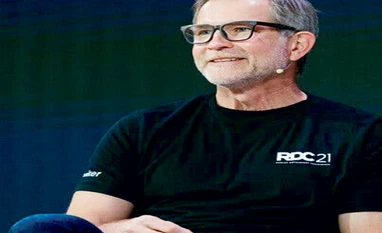
This is the story of the incredible cloning tax break. In 2004, David Baszucki, fresh off a stint as a radio host in Santa Cruz, California, started a tiny video-game company. It was eligible for a tax break that lets investors in small businesses avoid millions of dollars in capital gains taxes if the start-ups hit it big.
Today Baszucki’s company, Roblox, the maker of one of the world’s most popular video-gaming platforms, is valued at about $60 billion. Baszucki is worth an estimated $7 billion.
Yet he and his extended family are reaping big benefits from a tax break aimed at small businesses.
Baszucki and his relatives have been able to multiply the tax break at least 12 times. Among those poised to avoid millions of dollars in capital gains taxes are Baszucki’s wife, his four children, his mother-in-law and even his first cousin-in-law, according to securities filings and people with knowledge of the matter.
The tax break is known as the Qualified Small Business Stock, or QSBS, exemption. It allows early investors in companies in many industries to avoid taxes on at least $10 million in profits.
The goal, when it was established in the early 1990s, was to coax people to put money into small companies.
Thanks to the ingenuity of the tax-avoidance industry, investors in hot tech companies are exponentially enlarging the tax break. The trick is to give shares in those companies to friends or relatives. Even though these recipients didn’t put their money into the companies, they nonetheless inherit the tax break, and a further $10 million or more in profits becomes tax-free.
The savings for the richest American families — who would otherwise face a 23.8 per cent capital gains tax — can quickly swell into the tens of millions. The maneuver, which is legal, is known as “stacking,” because the tax breaks are piled on top of one another.
Early investors in some of Silicon Valley’s marquee start-ups — including Uber, Lyft, Airbnb, Zoom, Pinterest and DoorDash — have all replicated this tax exemption by giving shares to friends and family, according to people who worked or were briefed on the tax strategies.
So have partners at top venture capital firms like Andreessen Horowitz, who have figured out ways to claim tens of millions of dollars in tax exemptions for themselves and relatives year after year, according to industry officials and lawyers.
Representatives of those firms declined to comment or didn’t respond to requests for comment.
“QSBS is an example of a provision that is on its face already outrageous,” said Daniel Hemel, a tax law professor at the University of Chicago. “But when you get smart tax lawyers in the room, the provision becomes, in practice, preposterous.”
Manoj Viswanathan, who is a director of the Center on Tax Law at the University of California, Hastings, estimates the tax break will cost the government at least $60 billion over the coming decade. But that doesn’t include taxes avoided by stacking, and so the true cost of the tax break is probably many times higher.
The Biden administration has proposed shrinking the benefit by more than half. But the plan wouldn’t restrict wealthy investors from multiplying the tax break.
The likely result, said Paul Lee, the chief tax strategist at Northern Trust Wealth Management, would be even more tax avoidance.

 "A grand tax loophole for the ultrawealthy is very easily multiplied")











