Home / World News / As unpredictable Olympics loom, Japan's sponsors struggle to adapt
As unpredictable Olympics loom, Japan's sponsors struggle to adapt
Many sponsors are uncertain how to proceed with advertising campaigns or marketing events
premium
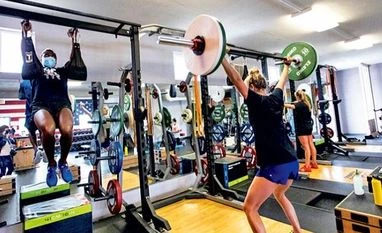
US women’s water polo team trains for the Tokyo Olympics. Over 60 Japanese firms have together paid more than $3 billion to sponsor the Games Photo: Reuters
With less than two months left until the start of the Tokyo Olympic Games, Japan’s Asahi Breweries still doesn't know whether fans will be allowed into stadiums to buy its beer.
Japan has scaled back its Olympic plans amid the Covid-19 pandemic and a slow vaccine rollout. Now, foreign spectators won’t be allowed in the country and organisers have yet to decide how many domestic spectators, if any, can attend.
Over 60 Japanese firms together paid a record of more than $3 billion to sponsor the Tokyo Games, an event most Japanese now want cancelled or delayed again. Sponsors paid another $200 million to extend contracts after the Games were delayed last year.
Many sponsors are uncertain how to proceed with advertising campaigns or marketing events, according to 12 officials and sources at companies directly involved in sponsorship.
Asahi has the exclusive rights to sell beer, wine and non-alcoholic beer at the stadiums. But it won’t know more until there is a decision about domestic spectators, a spokesman said. That is expected to happen around June 20, toward the end of the current state of emergency in Tokyo.
Even if spectators are allowed, the Tokyo government has no plans to allow alcohol at its public viewing sites outside venues, a representative said. Asahi hasn’t made major marketing changes yet, the spokesman said. In May it started selling its “Super Dry” beer with a new Tokyo 2020 design, as planned.
From the start, Japan seized on the Olympics as a rare marketing opportunity: Tokyo’s bid touted omotenashi — exquisite hospitality.
But sponsors have grown frustrated with what they see as slow decision-making and have complained to organisers, according to one of the sources, an employee of a sponsor company. “There are so many different scenarios that we can't prepare,” said the source.
Companies have vented to organisers, while lower-tier sponsors complain their concerns aren't being heeded, the source said.
Sponsors are divided into four categories, with global sponsors, who usually have multi-year deals, at the top. The other three tiers are companies whose contracts are solely for the Games.
In response to Reuters questions about sponsors’ facing difficulty because of the delayed decision on spectators, the Tokyo organising committee said it was working closely with partners and all stakeholders.
About 60 per cent of Japanese favour cancelling or delaying the event, a recent poll showed. The government, the International Olympic Committee, and Tokyo organisers have said the Games will go ahead.
Lost opportunity
For global sponsor Toyota Motor Corp, the Games were a chance to showcase its latest technology. It had planned to roll out about 3,700 vehicles, including 500 Mirai hydrogen fuel-cell sedans, to shuttle athletes and VIPs among venues. It also planned to use self-driving pods to carry athletes around the Olympic village.
Such vehicles will still be used, but on a much smaller scale - a “far cry from what we had hoped and envisioned,” a Toyota source said. A full-scale Olympics, the source said, would have been a “grand moment for electric cars”. A Toyota spokeswoman declined to comment.
Read this article for free
Register to continue reading premium journalism and analysis from Business Standard.

 "As unpredictable Olympics loom, Japan's sponsors struggle to adapt")












 Connect with us on WhatsApp