
AstraZeneca's nasal Covid vaccine not as effective as expected: Study
AstraZeneca's intranasally-administered vaccine against Covid-19 did not perform as expected in a small study published on Tuesday
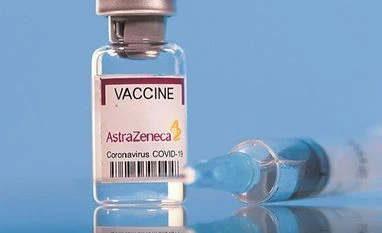 "AstraZeneca's nasal Covid vaccine not as effective as expected: Study")
WebinarsNew
Deep DiveNew
Explore Business Standard
AstraZeneca's intranasally-administered vaccine against Covid-19 did not perform as expected in a small study published on Tuesday
AstraZeneca's intranasally-administered vaccine against COVID-19 did not perform as expected in a small study published on Tuesday, suggesting there are likely to be challenges in making nasal sprays a reliable option.
The findings from a Phase 1 clinical trial, published in the journal eBioMedicine, show mucosal antibody responses were generated in a minority of participants.
Systemic immune responses, which involves many other immune cells, to intranasal vaccination were also weaker compared with intramuscular vaccination, the researchers said.
The study was performed in collaboration with the University of Oxford and used the same vaccine based on the ChAdOx1 adenovirus vector, as is already licensed for use by injection.
The ChAdOx1 vector used in the vaccine is a weakened version of a common cold virus (adenovirus) that has been genetically modified so it is impossible for it to replicate in humans.
The latest study is thought to be the first to have published data from administration of an adenovirus-vectored vaccine using a simple nasal spray.
The trial enrolled 30 previously unvaccinated participants to receive a primary dose of the intranasal vaccine.
Additionally, the researchers studied the feasibility of the intranasal vaccine as a booster. 12 participants, who had previously received a standard two-dose COVID-19 vaccine schedule by injection, were administered the intranasal vaccine.
The study found that the vaccine did not generate a consistent mucosal antibody nor a strong systemic immune response.
However, no serious adverse events or safety concerns were reported during the trial, the researchers said.
"The nasal spray did not perform as well in this study as we had hoped, said Associate Professor Sandy Douglas, Chief Investigator of the trial at the University of Oxford.
This was quite different from recent data from China, which has suggested good results can be achieved by delivery of a similar vaccine deep into the lungs with a more complex nebuliser device," Douglas said.
India last month gave emergency-use approval for Hyderabad-based Bharat Biotech's iNCOVACC, an intranasal antidote to virus that its makers termed "a global gamechanger".
The company claimed the vaccine was "safe, well-tolerated, and immunogenic" when compared to its own Covaxin in a phase III trial of over 3,000 participants across 14 sites in India.
"A nasal spray vaccine similar to ours has recently been approved for intranasal use in India and we are looking forward to the peer-reviewed publication of the clinical trial data used to support that, Douglas said.
"We believe that delivery of vaccines to the nose and lungs remains a promising approach, but this study suggests there are likely to be challenges in making nasal sprays a reliable option," he added.
One possibility, the researchers explained, is simply that the majority of the nasal spray vaccine ends up being swallowed and destroyed in the stomach -- delivery to the lungs could avoid that.
A further challenge is that researchers don't fully understand the relationships between the strength and types of immune responses within the airways and protection against infection.
"We urgently need more research to develop vaccines which can block transmission of respiratory pandemic viruses using delivery routes which are safe and practical at large scale, Douglas added.
(Only the headline and picture of this report may have been reworked by the Business Standard staff; the rest of the content is auto-generated from a syndicated feed.)
First Published: Oct 11 2022 | 7:14 PM IST


 Connect with us on WhatsApp