Home / World News / China cracking down on pollution with revolutionary green policies
China cracking down on pollution with revolutionary green policies
The government's war on air pollution fits neatly with another goal: domination of the global electric-vehicle industry
premium
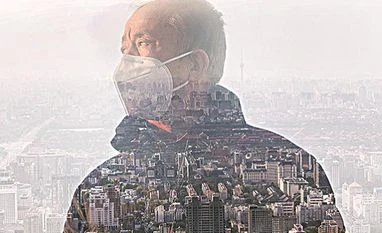
Besides a reduction in household coal use, measures to cut industrial emission and favourable weather conditions “contributed to the very dramatic reduction in pollution levels” in Beijing
China is cracking down on pollution like never before, with new green policies so hard-hitting and extensive they can be felt across the world, transforming everything from electric vehicle demand to commodities markets.
Four decades of breakneck economic growth turned China into the world’s biggest carbon emitter. But now the government is trying to change that without damaging the economy — and perhaps even use its green policies to become a leader in technological innovation.
China’s air pollution is so extreme that in 2015, independent research group Berkeley Earth estimated it contributed to 1.6 million deaths per year in the country.
The smog is heaviest in northern industrial provinces such as Shanxi, the dominant coal mining region, and steel-producing Hebei. Emissions there contribute to the planet’s largest mass of PM 2.5 air pollution — the particles which pose the greatest health risks because they can become lodged in the lungs. It can stretch from Mongolia to the Yellow Sea and often as far as South Korea.
Leaders at the annual National People’s Congress said they will raise spending to curb pollution by 19 per cent over the previous year to 40.5 billion yuan and aim to cut sulfur dioxide and nitrogen oxide emissions by 3 per cent. They said heavy air pollution days in key cities are down 50 per cent in five years.
The country had become the world’s No 1 carbon dioxide emitter as it rose to dominate global exports. Emissions have started to fall again.
The government’s war on air pollution fits neatly with another goal: domination of the global electric-vehicle industry. Elon Musk’s Tesla might be the best-known name, but China has been the global leader in EV sales since 2015, and is aiming for 7 million annual sales by 2025.
To get there, it’s subsidising manufacturers and tightening regulation around traditional fossil-fuel powered cars. Beneficiaries include BYD, a Warren Buffett-backed carmaker that soared 67 per cent last year and sold more cars than Tesla. Goldman Sachs Group has a buy rating on shares of Geely Automobile Holdings.
Worldwide, solar panel prices are plunging — allowing a faster shift away from carbon — thanks to the sheer scale of China’s clean-energy investment. It’s spending more than twice as much as the US. Two-thirds of solar panels are produced in China, BNEF estimates, and it’s home to global leaders, including JinkoSolar Holding and Yingli Green Energy Holding.
The trend towards clean energy is poised to keep gathering steam worldwide. BNEF projects global investment in new power generation capacity will exceed $10 trillion between 2017 and 2040. Of this, about 72 per cent is projected to go toward renewable energy, roughly evenly split between wind and solar.
China’s efforts to cut excess industrial capacity overlap with the imperative to clean up the environment. Combined, those forces have had a hefty impact on commodity prices. Coal, steel, and aluminum prices soared last year as factories shut and mines closed. Under the weight of new rules on pollutant discharge, paper prices did the same. Some markets have recovered somewhat since then, some haven’t.
China has also stopped accepting shiploads of other countries’ plastic and paper trash, a response to public concern over pollution and a decreased need for scrap materials. The government has set up a special police force, and polluting factories have been closed. Officials obediently banned coal, sending natural gas sales surging, before backtracking after supply shortfalls left many areas in the cold.
While smog was long excused as the inevitable byproduct of rising wealth, there’s no sign so far that the cleanup is derailing the country’s economy. Growth last year accelerated to 6.9 percent — the first uptick in seven years — and remains a crucial prop for global expansion.
What’s more, China sees high-tech industries like electric cars and solar panels as its chance to lead the world, setting standards and cornering markets as they begin to build momentum.
Read this article for free
Register to continue reading premium journalism and analysis from Business Standard.

 "China cracking down on pollution with revolutionary green policies")












 Connect with us on WhatsApp