
China delays new mission while Nasa congratulates on Mars images
China postponed a supply mission to its new space station for unspecified technical reasons
 "China delays new mission while Nasa congratulates on Mars images")
WebinarsNew
Deep DiveNew
Explore Business Standard
China postponed a supply mission to its new space station for unspecified technical reasons
China postponed a supply mission to its new space station Thursday for unspecified technical reasons, while photos sent back from Mars by its newly arrived rover earned plaudits from NASA despite only sporadic contacts between the Chinese and American space programmes.
The Tianzhou-2 cargo spacecraft was expected to have been launched early Thursday morning. China Manned Space announced the delay on its website but didn't say when the rescheduled launch may occur.
It would be the first mission to head to the main Tianhe module of the space station that was launched on April 29. A total of 11 launches are planned by the end of next year to deliver the station's other two modules, various components and supplies and a three-person crew.
The launch of Tianhe, or Heavenly Harmony, was considered a success although China was criticized for allowing the uncontrolled reentry of part of the rocket that carried it into space. Usually, discarded rocket stages reenter the atmosphere soon after liftoff, normally over water, and don't go into orbit.
NASA Administrator Sen. Bill Nelson said at the time that China had failed to meet responsible standards regarding space debris.
China's space programme has suffered relatively few setbacks since it first put an astronaut into orbit in 2003, although the space station launch was delayed by the failure of an earlier version of the massive Long March 5B rocket.
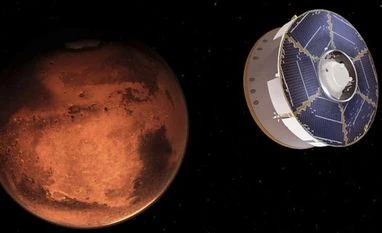
Earlier this month, China also landed a probe, Tianwen-1, and its accompanying rover, Zhurong, on Mars and has begun sending back pictures from the surface of the red planet.
In a message posted to the NASA website on Wednesday, Nelson congratulated the China National Space Administration on receiving those first images.
As the international scientific community of robotic explorers on Mars grows, the United States and the world look forward to the discoveries Zhurong will make to advance humanity's knowledge of the Red Planet. I look forward to future international discoveries, which will help inform and develop the capabilities needed to land human boots on Mars, Nelson said.
The United States is the only other country to have successfully landed and operated a spacecraft on Mars nine times, beginning with the twin Vikings in 1976 and, most recently, with the Perseverance rover in February.
China also recently brought back lunar samples, the first by any country's space program since the 1970s, and also landed a probe and rover on the moon's less explored far side.
China earlier launched two smaller experimental space stations. It has been excluded from the International Space Station largely at the insistence of the United States, which is wary of the secrecy surrounding the Chinese space program and its close military links. Congressional approval is also required for any cooperation between NASA and the CNSA.
(Only the headline and picture of this report may have been reworked by the Business Standard staff; the rest of the content is auto-generated from a syndicated feed.)
First Published: May 20 2021 | 3:35 PM IST

