China telecom firm ZTE exits 5-year probation after US court ruling

ZTE had been accused of violating probation over an alleged conspiracy to commit visa fraud.
ZTE
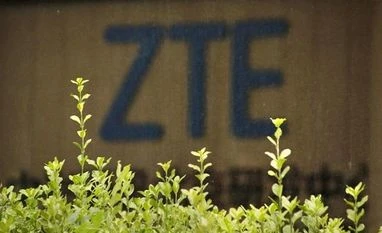
The logo of China's ZTE Corp is seen at the lobby of ZTE Beijing research and development center building in Beijing, China Photo: Reuters
Reuters
4 min read Last Updated : Mar 23 2022 | 10:45 AM IST
A U.S. judge on Tuesday ruled that China's ZTE Corp, a top telecommunications equipment maker, should be allowed to end its five-year probation from a 2017 guilty plea.

The ruling came on the final day of the company's probation for illegally shipping U.S. technology to Iran. It marks the end of a criminal case against ZTE, though it is still subject to a 2018 settlement agreement with the U.S. Commerce Department.

The company asked that trading in its shares resume at 0500 GMT in Shenzhen and Hong Kong after requesting a halt following the decision by U.S. District Judge Ed Kinkeade in Texas. The company's shares declined earlier this month after word of a possible probation violation surfaced.

ZTE had been accused of violating probation over an alleged conspiracy to commit visa fraud. According to an indictment unsealed last March, a former ZTE research director and a Georgia Institute of Technology professor allegedly conspired to bring Chinese nationals to the U.S. to conduct research at ZTE from at least 2014 through 2018 while on J-1 visas sponsored by the university.

While ZTE has not been charged in the visa case, which is pending in Atlanta, Georgia, Kinkeade held a hearing in Dallas last week on the fraud allegation as a possible violation of ZTE's probation.

In his Tuesday ruling, the judge found ZTE was legally responsible for the actions of the former ZTE director. But he decided to not take any further action against ZTE, which had already reached the maximum term of probation and, ZTE argued, had already been fined the maximum as well.
As part of its 2017 guilty plea deal, ZTE paid the U.S. $892 million.

There was an "open question about legal tools left for the court," the judge wrote. Despite the favorable ruling, the judge encouraged the government to pursue any reasonable charges and criminal or civil penalties against the company, especially for export compliance matters.

The visa issue was not the first problem that surfaced for ZTE since the plea deal. In 2018, the U.S. Commerce Department found ZTE made false statements about disciplining executives tied to the illegal shipments to Iran and, as a result, issued a total ban on the company buying U.S. components.

ZTE, crippled by the move, paid a $1 billion penalty and agreed to change its leadership and cooperate with a second 10-year monitor, as part of a Commerce Department agreement lifting the ban.

The judge took action in 2018 over the false statements, too, extending ZTE's probation and court-appointed monitor from three to five years.
In his Tuesday ruling, the judge noted that ZTE argued the visa-fraud related events occurred more than three years ago, and that new leadership had brought an improved export compliance program.

"The Company has made strides," the judge said, adding that ZTE's export control and compliance programs were effectively "nonexistent" when it was originally sentenced.

He said he considered ZTE's compliance a mitigating factor, but that its record of compliance could be summarized in one word: "sometimes."
ZTE in a statement to Reuters said it was "proud of the significant improvement in the company's compliance program and culture." It said the improvement had been acknowledged over the years.

Evans Rice, a lawyer for ZTE, said in court last week that, in 2020, the court-appointed monitor had recognized "a sea change" in the company's commitment to compliance and cooperation.

The U.S. Department of Justice did not immediately respond to a request for comment. Nor did the Commerce Department respond to a request for comment after hours.

The professor charged in the visa case, Gee-Kung Chang, has pleaded not guilty. The status of the former ZTE research director, Jianjun Yu, is unclear. ZTE said he left the company in 2019.

The case against ZTE was the first of a series of U.S. government actions against major Chinese tech companies that caused tensions in U.S.-China relations.

It was followed by a case, still pending, against Huawei Technologies Co Ltd, the hobbled Chinese telecommunications equipment giant, which was also placed on a U.S. trade blacklist in 2019 for activities contrary to U.S. national security or foreign policy interests.

(Reporting by Karen Freifeld; Editing by Chris Sanders and Christopher Cushing)

One subscription. Two world-class reads.

Already subscribed? Log in

Subscribe to read the full story →
*Subscribe to Business Standard digital and get complimentary access to The New York Times

Smart Quarterly

₹900

3 Months

₹300/Month

SAVE 25%

Smart Essential

₹2,700

1 Year

₹225/Month

SAVE 46%
*Complimentary New York Times access for the 2nd year will be given after 12 months

Super Saver

₹3,900

2 Years

₹162/Month

Subscribe

Renews automatically, cancel anytime

Here’s what’s included in our digital subscription plans

Exclusive premium stories online

  • Over 30 premium stories daily, handpicked by our editors

Complimentary Access to The New York Times

  • News, Games, Cooking, Audio, Wirecutter & The Athletic

Business Standard Epaper

  • Digital replica of our daily newspaper — with options to read, save, and share

Curated Newsletters

  • Insights on markets, finance, politics, tech, and more delivered to your inbox

Market Analysis & Investment Insights

  • In-depth market analysis & insights with access to The Smart Investor

Archives

  • Repository of articles and publications dating back to 1997

Ad-free Reading

  • Uninterrupted reading experience with no advertisements

Seamless Access Across All Devices

  • Access Business Standard across devices — mobile, tablet, or PC, via web or app

Topics :ZTETelecom industryVisa fraud

Next Story



