Chinese officials pledged to tighten supervision in the financial services industry, suggesting a recent regulatory onslaught on the private sector that sent shockwaves globally is not over yet.
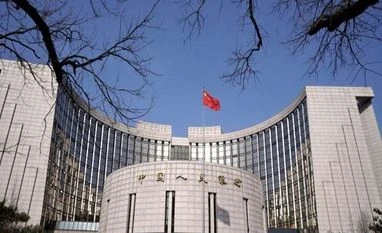
The central bank will close loopholes in its financial technology regulation, and include all types of financial institutions, services and products into its prudential supervision framework, Chen Yulu, deputy governor of the People’s Bank of China, said at the China International Finance Annual Forum in Beijing Saturday. Authorities will also boost foreign exchange market supervision at macro and micro levels, he said without elaborating.
“We will enhance the effectiveness and professionalism of financial regulation, build all kinds of firewalls to resolutely prevent systemic risks,” Chen said.
The China Securities Regulatory Commission will improve its regulations for companies seeking overseas listings, and enhance channels for foreign investors to participate in China’s onshore securities futures market, Vice Chairman Fang Xinghai said at the same forum.
Investors have endured significant losses this year with the nation’s benchmark CSI 300 Index down about 16% from its February high, making it among the worst-performing major gauges in Asia this year.
China is moving to plug a gap that’s for decades allowed technology giants like Alibaba Group Holding Ltd. and Tencent Holdings Ltd. to sidestep restrictions on foreign investment. In July, regulators proposed rules that would require nearly all companies seeking to list in foreign countries to undergo a cybersecurity review.
The securities regulator has communicated with foreign investors on the recent plunge in overseas-listed Chinese stocks, triggered by a spate of surprise crackdowns on industries from private tutoring to Internet platforms, Fang said. The investors believed they have under-allocated Chinese assets, he said.
Extreme easing policies by central banks in major developed economies over the pandemic have led to increasing financial fragility globally, said Zhou Liang, vice-chairman of the China Banking and Insurance Regulatory Commission, who was speaking on the same panel. The banking regulator will focus on preventing risks from foreign institutions’ “malicious” cross-border capital movement, he said.

 "Chinese finance regulators vow tighter supervision, new rules")












 Connect with us on WhatsApp