
Chinese internet silenced Tennis star Peng Shuai in 20 minutes
China silenced Tennis star Peng Shuai in 20 minutes after she went online and accused Zhang Gaoli, a former vice-premier, of sexual assault
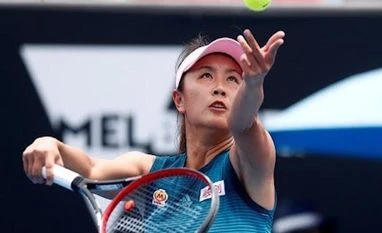 "Chinese internet silenced Tennis star Peng Shuai in 20 minutes")
WebinarsNew
Deep DiveNew
Explore Business Standard
China silenced Tennis star Peng Shuai in 20 minutes after she went online and accused Zhang Gaoli, a former vice-premier, of sexual assault
China known for censoring inconvenient news silenced Tennis star Peng Shuai in 20 minutes after she went online and accused Zhang Gaoli, a former vice-premier, of sexual assault.
Paul Mozur, Muyi Xiao, Jeff Kao and Gray Beltran, writing in The New York Times (NYT) said that the allegation reached the heights of Beijing's opaque political system, and officials turned to a tested playbook to stamp out discussion and shift the narrative.
Twenty minutes was all it took to mobilize the Chinese internet. When inconvenient news erupts on the Chinese internet, the censors jump into action.
The tactics have helped Beijing weather a series of political crises at home in recent years, including the 2019 protests in Hong Kong and its initial response to COVID-19, reported NYT.
This time, according to analyses by The New York Times and ProPublica, China began a multifaceted propaganda campaign that was at once sophisticated and clumsy.
Inside the country, officials used internet controls to scrub almost all references to the accusation and restrict digital spaces where people might discuss it.
At the same time, they activated a widely followed network of state-media commentators, backed by a chorus of fake Twitter accounts, to try to punch back at critics abroad, the analyses show, reported Mozur, Xiao, Kao and Beltran.
First, the censors quickly expunged Peng's allegations, which she posted on Weibo, China's version of Twitter. Then they scrubbed away other posts referring to Peng's claims. They cast an expansive net, for a while even limiting conversations around topics as broad as "tennis."
In total, the authorities banned several hundred keywords, according to Xiao Qiang, a researcher on internet freedom at the University of California, Berkeley.
Even as the censors broadly muted discussions, they were careful to leave some references to Peng. They kept Peng's account on Weibo, but made it nearly invisible by removing it from search results. They disabled comments on Peng's posts, and on other older articles that mentioned her name. The tactic effectively closed off digital forums where the curious might discuss the accusations, reported NYT.
Officials have deleted the accounts of other prominent celebrities, sports stars and intellectuals who have fallen afoul of China's government, but Peng's case is different, Xiao said.
Her allegations had already received widespread attention and she did not take a direct stand against the government itself, making it more difficult to simply erase her online presence entirely, he added.
Beijing can obliterate discussions it doesn't like on the Chinese internet, but outside the country, the propaganda apparatus has to take a different tack.
For domestic political scandals, the strategy is usually to stay silent and hope international attention blows over. This time it didn't. When Peng Shuai vanished from public life for nearly two weeks after making the allegation, the Women's Tennis Association and some of the world's top tennis players, including Naomi Osaka and Novak Djokovic, publicly raised concerns about her safety. Soon the hashtag #WhereIsPengShuai was ricocheting across global social media.
On Twitter, the foreign arm of China's state broadcaster, China Global Television Network, or CGTN, posted a screenshot of what it said was an email from Peng denying the sexual assault accusations and asking to be left alone.
However, the email backfired, drawing more scrutiny and concern. People pointed out that the prose was stilted, and in the image of the email, a cursor was visible, raising questions about who wrote the text.
(Only the headline and picture of this report may have been reworked by the Business Standard staff; the rest of the content is auto-generated from a syndicated feed.)
First Published: Dec 10 2021 | 9:25 AM IST

