Home / World News / Coronavirus can persist for months after traversing entire body: Study
Coronavirus can persist for months after traversing entire body: Study
Pathogen is capable of replicating in human cells beyond respiratory tract, say scientists
premium
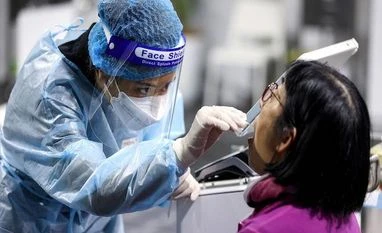
The coronavirus’ propensity to infect cells outside the airways and lungs is contested, with numerous studies providing evidence for and against the possibility. Photo: Bloomberg
3 min read Last Updated : Dec 27 2021 | 2:54 AM IST
The coronavirus that causes Covid-19, SARS-CoV-2, can spread within days from the airways to the heart, brain and almost every organ system in the body, where it may persist for months, a study found.
In what they describe as the most comprehensive analysis to date of the virus’s distribution and persistence in the body and brain, scientists at the US National Institutes of Health said they found the pathogen is capable of replicating in human cells well beyond the respiratory tract.
The results, released online on Saturday in a manuscript under review for publication in the journal Nature, point to delayed viral clearance as a potential contributor to the persistent symptoms wracking so-called long Covid sufferers. Understanding the mechanisms by which the virus persists, along with the body’s response to any viral reservoir, promises to help improve care for those afflicted, the authors said.
“This is remarkably important work,” said Ziyad Al-Aly, director of the clinical epidemiology center at the Veterans Affairs St Louis Health Care System in Missouri, who has led separate studies into the long-term effects of Covid-19.
“For a long time now, we have been scratching our heads and asking why long Covid seems to affect so many organ systems. This paper sheds some light, and may help explain why long Covid can occur even in people who had mild or asymptomatic acute disease.”
The findings haven’t yet been reviewed by independent scientists, and are mostly based on data gathered from fatal Covid cases, not patients with long Covid or “post-acute sequelae of SARS-CoV-2,” as it’s also called.
Contentious findings
The coronavirus’ propensity to infect cells outside the airways and lungs is contested, with numerous studies providing evidence for and against the possibility. The research undertaken at the NIH in Bethesda, Maryland, is based on extensive sampling and analysis of tissues taken during autopsies on 44 patients who died after contracting the coronavirus during the first year of the pandemic in the US. The burden of infection outside the respiratory tract and time to viral clearance isn’t well characterised, particularly in the brain, wrote Daniel Chertow, who runs the NIH’s emerging pathogens section, and his colleagues.
US airlines scrap hundreds of Christmas Day flights
US airlines canceled more than 900 flights on Saturday, the second straight day of massive cancellations as surging Covid-19 infections have sidelined some pilots and other crew members, upending plans for tens of thousands of holiday travelers over the Christmas weekend. A total of 913 Christmas Day flights, including domestic flights and those into or out of the country, were canceled, up from 690 on Christmas Eve, according to a running tally on flight-tracking website FlightAware.com. Around 1,110 flights were delayed. Reuters
China’s local Covid case count hits a 21-month high
China reported its highest daily rise in local Covid-19 cases in 21 months as infections more than doubled in the northwestern city of Xian, China's latest Covid hot spot.
The city of 13 million, which entered its fourth day of lockdown, detected 155 domestically transmitted cases with confirmed symptoms for Saturday, up from 75 a day earlier, official data showed on Sunday.
That drove the national daily count to 158, the highest since China managed to contain a nationwide outbreak in early 2020. Reuters




