China's official think-tanks countered the Dalai Lama's assertion that Chinese government cannot decide about his successor, saying the next highest monk of Tibetan Buddhism must have the endorsement of Beijing.
"The government of the People's Republic of China has proclaimed the power to approve the naming of 'high' reincarnations in Tibet, based on a precedent set by the Qianlong Emperor of the Qing dynasty," said WangDehua, Co-Director, Centre for South Asia Studies, Tongji University in Shanghai.
"In my opinion, it's ridiculous for the Dalai Lama to say he changed the centuries-old tradition, because the tradition was already changed in 1959. The central government will definitely support the Dalai Lama's successor if he or she is selected according to Chinese laws and historical rules, and the Tibetan people's will," he told PTI in Beijing.
Speaking in Tawang, close to the Chinese border in Arunachal Pradesh, the Dalai Lama on Saturday said the Chinese government cannot decide who will be the next Dalai Lama.
"Beijing's bid to name my successor to undermine the Tibetans' cause is 'nonsense'," he said.
"As early as 1969, I had said the Tibetan people will decide if this very institution of Dalai Lama should continue or not. If this institution is no longer relevant, it should stop," said the Dalai Lama, who had fled Tibet back in 1959 to take refuge in Tawang.
"Nobody knows who or where the next Dalai Lama will be born or come from. Some indication (about his reincarnation) might come at the time of my death, but now there is no such indication," he said, asserting that China has no role in selecting his successor.
The Chinese government is yet to react to his comments made from Tawang in Arunachal Pradesh, which China claims as part of Southern Tibet.
Shen Dingli, Vice Dean, Institute of American Studies, Fudan University, too said the Dalai Lama has been saying that the tradition of Dalai Lama could end when he passes away. However, his successor has to have China's approval, he said.
Since he left Tibet in 1959 to escape from the Chinese occupation, the Dalai Lama who turned 81 this year has been keeping China on tenterhooks about his successor.
Considering the political and spiritual influence the Dalai Lamas' had over Tibetans for centuries, China is keen to pick up the successor to the current Dalai Lama to firm up its hold over Tibet, which it kept under tight political, military and administrative control after it took over the area in 1951.
China is apprehensive that the Dalai Lama may pick up a successor from Tawang from where the sixth Dalai Lama hailed.
While firmly opposing his visit to the Tawang in general and Arunachal Pradesh in particular with a diplomatic protest to India for permitting it, China is watching warily about any moves by the Dalai Lama to pick up his successor from there.
Statements by local legislators and officials from Tawang that it was the wish of the people that the next Dalai Lama should come from there also caused consternation in China.
"According to traditional practice it only happens after death of the Dalai. It is well known that the title of Dalai Lama, which was originally an academic title conferred by a Mongolian emperor under the rule of the (Chinese emperor) Ming government (1368-1644), became a political and religious title after it was recognised by the Qing government (1644-1911)," Wang said.
"Since then, the selection of the Dalai Lama has to be supervised and recognised by the central government in order to achieve legitimacy," he said.
Commenting on Arunachal Pradesh Chief Minister Pema Khandu's remarks that "an independent Tibet, not China, is India's true northern neighbour, he said it's against India's long-standing policy and will damage our bilateral relations.
Ahead of Dalai Lama's visit to Tawang, a scholar of China's state-run Tibetology Research Centre had said that the Dalai Lama's successor should come from a native place in Qinghai, adjacent to Tibet Autonomous Region.
Lian Xiangmin, Director of contemporary research of the centre, told media that Dalai Lama's successor should be from his native town in Tibet and he should renounce separatism and accept Tibet and Taiwan as an integral part of China.
Dalai Lama was born in Taktser village, Amdo of Qinghai province and picked up for the high spiritual post when he was an eight-year-old boy as part of reincarnation principle followed under Tibetan religious customs.
"On one hand the Dalai Lama says he will live up to 113 years, on the other hand, he talks about succession issue himself," Lin said.
"So far there have been 14 Dalai Lamas who have been produced in China. We hope that the present Dalai Lama will live for 113 years old. But if a succession is indeed needed we hope the new one will be produced according to the historical conventions in a traditional way," he said.
Outlining conditions for political rapprochement, Lin said the Chinese government has stipulated that the Dalai Lama must give up his pursuit of Tibet independence, stop separatist activities, recognise Tibet and Taiwan as part of China.

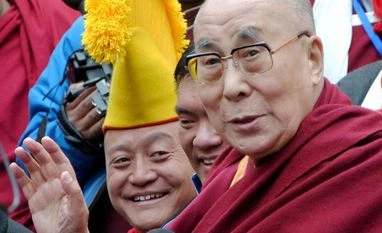 "Dalai Lama's successor must have China's endorsement: Chinese think-tanks")

