
Elon Musk says may need $30 billion to keep Starlink in orbit
By Supantha Mukherjee and Clara-Laeila Laudette
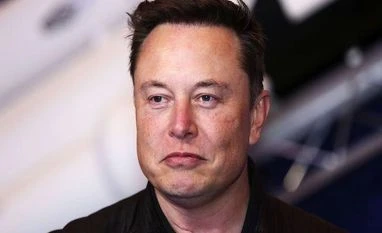 "Elon Musk says may need $30 billion to keep Starlink in orbit")
WebinarsNew
Deep DiveNew
Explore Business Standard
By Supantha Mukherjee and Clara-Laeila Laudette
By Supantha Mukherjee and Clara-Laeila Laudette
BARCELONA (Reuters) -Billionaire entrepreneur Elon Musk said on Tuesday that his Starlink venture was growing quickly as he forecast total investment costs in the satellite internet business at between $20 billion and $30 billion.
Without disclosing details, he also said Starlink has "two quite significant partnerships with major country telcos" that could help the SpaceX division plug the gaps in fifth-generation mobile and cellular networks.
The Tesla Inc CEO and founder of SpaceX, a rocket ship venture that seeks to colonise Mars, said investment costs before Starlink achieves fully positive cash flow would be $5-$10 billion.
"It's a lot, basically," Musk said in a video interview from California with the Mobile World Congress, the telecoms industry's largest annual gathering, which is being held in Barcelona.
Starlink, an array of low-orbit satellites offering high-speed, low-latency connectivity, is already offering a trial service and aims to cover the world, except for the north and south poles, starting in August, Musk said.
It has more than 1,500 satellites aloft and is operating in about a dozen countries, adding more every month, with Musk forecasting that total customer numbers would reach half a million over the next 12 months, from 69,000 now.
Some analysts question whether satellite internet can be a viable business model because it mainly targets remote areas, where there may not be enough people able to pay the high tariffs needed to recoup the investment costs.
Musk said he was talking to possible partners as a number of countries require operators to provide rural coverage as conditions of their 5G licences.
He also said if telecom operators have cellular stations in remote regions, they can use Starlink to allow them to connect to core networks.
The rapid spread of wireless and terrestrial broadband, along with high prices, were significant factors in killing previous low-Earth-orbit satellite ventures.
Starlink is selling terminals for half price, Musk said, adding he expects to bring down terminal costs from over $1,000 to $300-500 in the next 12 months.
"If we succeed in not going bankrupt, then that'll be great, and we can move on from there," he said.
Starlink faces competition from a number of players including Amazon.com Inc subsidiary Kuiper, OneWeb - a collapsed satellite operator rescued by the British government and India's Bharti Group.
(Reporting by Supantha Mukherjee and Clara-Laeila Laudette, additional reporting by Hyunjoo Jin in Berkeley, California, Writing by Douglas BusvineEditing by Gareth Jones, Bernadette Baum and Barbara Lewis)
(Only the headline and picture of this report may have been reworked by the Business Standard staff; the rest of the content is auto-generated from a syndicated feed.)
First Published: Jun 30 2021 | 2:07 AM IST


 Connect with us on WhatsApp