
EU condemns Taliban's ban on women working for NGOs over dress code issue
The European Union condemned the Taliban's ban on women working for NGOs and said that it was assessing the impact of its aid in Afghanistan
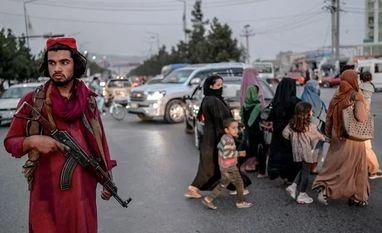 "EU condemns Taliban's ban on women working for NGOs over dress code issue")
WebinarsNew
Deep DiveNew
Explore Business Standard
The European Union condemned the Taliban's ban on women working for NGOs and said that it was assessing the impact of its aid in Afghanistan
The European Union on Saturday (local time) condemned the Taliban's ban on women working for NGOs and said that it was assessing the impact of its aid in Afghanistan, reported Al Jazeera.
"The European Union strongly condemns the Taliban's recent decision to ban women from working in national and international NGOs," said a spokeswoman for EU foreign policy chief Josep Borrell to the French news agency.
"We are assessing the situation and the impact it will have on our aid on the ground," she added.
In the latest crackdown on women's freedoms in Afghanistan, the Taliban regime has ordered all local and foreign non-governmental organisations (NGO) to stop female employees from coming to work in the country, reported Tolo News reported.
The Taliban-led Ministry of Economy ordered all national and international non-government organizations to suspend the jobs of female employees until further announcement, the Afghan news agency reported.
Afghanistan's Taliban rulers ordered all national and international NGOs to stop their women employees from working after "serious complaints" about their dress code, the economy ministry said on Saturday.
The order came days after the Taliban-run administration ordered universities to close to women, prompting strong global condemnation and sparking some protests and heavy criticism inside Afghanistan, reported Al Jazeera.
It was not immediately clear how the order would affect United Nations agencies, which have a large presence in Afghanistan delivering services amid the country's humanitarian crisis.
When asked whether the rules included UN agencies, Habib said the letter applied to organisations under Afghanistan's coordinating body for humanitarian organisations, known as ACBAR. That body does not include the United Nations but does include more than 180 local and international NGOs, reported Al Jazeera.
However, the United Nations often contracts with NGOs registered in Afghanistan to carry out its humanitarian work.
Ramiz Alakbarov, the UN deputy special representative for Afghanistan and humanitarian coordinator, said he was "deeply concerned" by reports of the letter, which was a "clear breach of humanitarian principles".
The Charge D'affaires for Norway, which funds aid in Afghanistan and hosted talks between Taliban and civil society members in January, condemned the move.
"The ban on female employees in NGOs must be reversed immediately," Paul Klouman Bekken tweeted. "In addition to being a blow to women's rights, this move will exacerbate the humanitarian crisis and hurt the most vulnerable Afghans."
Meanwhile, Taliban security forces used a water cannon to disperse women protesting the ban on university education for women on Saturday, said witnesses, reported Al Jazeera.
Since the announcement on Tuesday, Afghan women have since demonstrated in major cities against the ban, a rare sign of domestic protest since the Taliban seized power last year.
According to witnesses in the western city of Herat, about two dozen women on Saturday were heading to the provincial governor's house to protest the ban, chanting, "Education is our right," when they were pushed back by security forces firing the water cannon.
One of the protest organisers, Maryam, said between 100 and 150 women took part in the protest, moving in small groups from different parts of the city towards a central meeting point. She did not give her last name for fear of reprisals.
"There was security on every street, every square, armoured vehicles and armed men," she said. "When we started our protest, in Tariqi Park, the Taliban took branches from the trees and beat us. But we continued our protest. They increased their security presence. Around 11 am [06:30 GMT], they brought out the water cannon."
There has been widespread international condemnation of the university ban, including from Muslim-majority countries such as Saudi Arabia, Turkey, the United Arab Emirates and Qatar, as well as warnings from the United States and the G7 group of major industrial nations that the policy will have consequences for the Taliban.
Despite initially promising a more moderate rule respecting rights for women and minorities, the Taliban has widely implemented its interpretation of Islamic law since it seized power in August 2021.
It also has restricted women from most fields of employment, ordered them to wear head-to-toe clothing in public, and banned them from parks and gyms.
(Only the headline and picture of this report may have been reworked by the Business Standard staff; the rest of the content is auto-generated from a syndicated feed.)
First Published: Dec 25 2022 | 8:51 AM IST

