Fed makes it tougher to be a dollar bull, say world's biggest banks
The potential for the dollar to rise against major currencies has diminished after policy-makers kept rates on hold
Bloomberg The Federal Reserve's continued embrace this week of monetary stimulus, and tumbling government bond yields, are prompting even dollar bulls to warn of weakness ahead for the US currency.
Some of the world's biggest banks, including Credit Suisse Group AG, Bank of America, and Commerzbank say the potential for the dollar to rise against major currencies has diminished after policy makers kept rates on hold and stopped short of spelling out plans for an increase this year. Hedge funds and other large speculators pared bullish best on the dollar to the least since May.
"The global backdrop, as Fed Chair Janet Yellen said, is still fragile and now the Fed has said 'Yeah you're right to be worried about global growth, we are as well,'" said Lee Ferridge, head of macro strategy for North America at State Street Corp in Boston. Divergence in monetary policies "may still happen, but clearly the strength of the divergence is much less than we were expecting before. And that's got to start weighing on the dollar."
The Bloomberg Dollar Spot Index dropped 0.2 per cent to 1,201.74 this week in New York, reaching the lowest level since August 24. The US currency dropped added 0.4 per cent to $1.1298 per euro and lost 0.5 per cent to 119.98 yen.
Hedge funds and other large speculators slashed bets on dollar gains against eight major currencies, data from the Commodity Futures Trading Commission showed. Net dollar longs fell to 256,044 contracts in the week ended September 15, the least in four months.
While strategists at Credit Suisse, Bank of America and Commerzbank say the dollar may weaken in the near future, they still forecast a stronger greenback by the end of this year. Credit Suisse and Commerzbank predict the dollar to rise to $1.09 and $1.08 against the euro, while Bank of America reduced its estimate this week to $1.05 from parity versus the single currency.
In holding their benchmark federal funds rate target at zero to 0.25 per cent, Fed policy makers showed they still aren't convinced inflation will move gradually back to their 2 per cent target, despite continued gains in the labour market. Unemployment in August fell to 5.1 per cent, its lowest level since April 2008.
Treasury two-year note yields fell the most since 2009 after the Fed's September 17 statement, diminishing the relative allure of dollar-denominated debt.
Yellen said she's "focused particularly on China and emerging markets" and highlighted the dollar's 19 per cent surge since June last year has already tightened domestic financial conditions.
The dollar will come under pressure against the euro and yen until lower commodity prices and a falling inflation outlook - the same problems facing the Fed - prompt the European Central Bank and Bank of Japan to expand monetary easing further and re-establish divergence in monetary policies, according to Bank of America and Credit Suisse.
"If the Fed does not hike at all this year and the ECB does not commit to extend QE yet, EUR/USD could appreciate well above $1.15," David Woo, head of global rates and currencies research at Bank of America, wrote in a research note. "The market's dollar position versus the other major currencies is already light and investors will need to start accumulating dollar long positions ahead of an eventually inevitable Fed hike."
However, Richmond Federal Reserve President Jeffrey Lacker said he dissented at a Fed policy meeting because he thought the economy was now strong enough to warrant higher interest rates.
Fed policymakers on Thursday voted to keep the Fed's target interest rate at between zero and a quarter point.
"Such exceptionally low real interest rates are unlikely to be appropriate for an economy with persistently strong consumption growth and tightening labour markets," Lacker said in a statement.
He was the lone dissenter among the 10 Fed officials who voted at the meeting. Lacker said the Fed's target should rise by a quarter point.
Lacker has a history of dissent in Fed policy meetings. In 2012, he voted against eight straight policy decisions by the central bank. At the time he was urging the Fed to wind down asset purchases that were aimed at stimulating the economy.

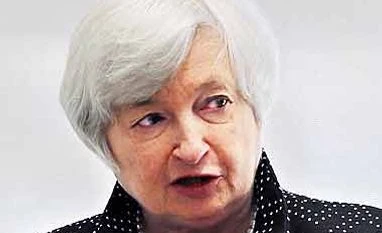 "Fed makes it tougher to be a dollar bull, say world's biggest banks")

