Fukushima water leak risk exaggerated: Japan watchdog
Nuclear Regulation Authority says information given by Tokyo Electric Power (Tepco) on the level of radioactive contamination was "scientifically unacceptable".
AFPPTI Tokyo The chief of Japan's nuclear watchdog chided the operator of the Fukushima plant today for its inability properly to explain problems, which he said was inflating fears around the world.
Shunichi Tanaka, chairman of the Nuclear Regulation Authority, said information given by Tokyo Electric Power (Tepco) on the level of radioactive contamination was "scientifically unacceptable".
He also lashed out at media coverage of a series of water leaks, saying reports were giving a misleading impression of the seriousness of the situation at the stricken plant.
Fukushima has leapt into the international spotlight as a series of setbacks have coincided with the final stages of Tokyo's bid to host the 2020 Olympic Games, where it faces off against Istanbul and Madrid this weekend.
Tanaka's comments come after Tepco announced it had detected a hotspot with a reading of 2,200 millisieverts per hour.
"What Tepco is talking about is the level of contamination," said Tanaka. "Describing it with the unit 'millisieverts per hour' is scientifically unacceptable.
"It's like describing how much something weighs by using centimetres," he said, adding the unit "becquerel" was more appropriate.
Tepco has confirmed that a reading of 2,200 millisieverts per hour would be enough to kill a person in a matter of hours.
But experts point out that this reading is taken very close to the source of the radiation. It drops dramatically -- to 40 millisieverts per hour -- just 50 centimetres (20 inches) away.
And the kind of radiation being emitted is very low energy, which means it is not able to penetrate the body easily.
That means while the dose could be fatal to a naked person immersed in the toxic liquid, it would do little to a worker wearing even rudimentary protection at a normal distance.
Tanaka said the media covering Fukushima needed to pay attention to the impact of what they reported.
"You should avoid the situation that Japan gets criticism from abroad because of misleading information," he told reporters.
He said fears of an environmental catastrophe from leaks of radioactive water were overblown.
"From what we can see from existing data... So far there is no meaningful effect" on the Pacific.
Thousands of tonnes of radioactive water are being stored in temporary tanks at Fukushima, 220 kilometres north of the Japanese capital. Much of it was used to cool molten reactors wrecked by the tsunami of March 2011.

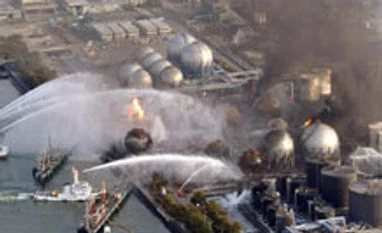 "Fukushima water leak risk exaggerated: Japan watchdog")


 Connect with us on WhatsApp