What Alibaba's Jack Ma should buy next

Ma could take his cue from China's 'new Silk Road', reports Tech in Asia
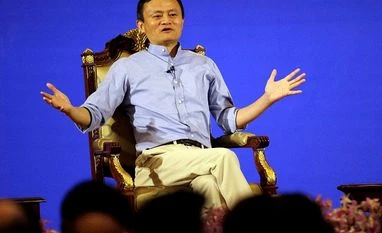
Jack Ma, executive chairman of the Alibaba Group, delivers a speech titled "A Conversation on Entrepreneurship and Inclusive Globalization" at  Foreign Ministry in Bangkok, Thailand. AP | PTI
Jack Ma, executive chairman of the Alibaba Group, delivers a speech titled "A Conversation on Entrepreneurship and Inclusive Globalization" at Foreign Ministry in Bangkok, Thailand. <b>AP | PTI<b/>
Osman Husain | Tech in Asia
Last Updated : Mar 02 2017 | 10:28 AM IST
Ever since Jack Ma’s Alibaba took control of Lazada in a $1 billion deal last year, there’s been speculation about what the e-commerce titan might do next.

I think the natural choice is Daraz, an online store for Pakistan, Bangladesh, Myanmar and Sri Lanka, which encompasses a combined market worth $610 billion.

Here’s how acquiring Daraz fits in.

First, Chinese companies aren’t averse to following their government’s lead. McKinsey notes that “government policy continues to be the critical shaping force” of the economy, with the state “possessing levers” to dictate the pace of economic growth.

The government’s pivot to Africa is now several years old. But now China’s embarking on a much more ambitious project through which it wants to establish itself as the central hub of global trade. Dubbed “One Belt, One Road”, the project aims to build road and railway links from Chinese industrial hubs to European capitals via Central and South Asia. 

An important part of this new Silk Road is Chinese investment in Pakistan, Bangladesh, Myanmar and Sri Lanka.

Lurking in these frontier markets of Pakistan, Bangladesh, Myanmar and Sri Lanka is Daraz. Alibaba officially doesn’t have a presence in these countries yet — they’re serviced by AliExpress. 


If Jack Ma does decide to buy Daraz, it’s likely the value of the transaction would probably be in the range of $100 to $150 million. Daraz could be a significant coup for the self-made billionaire. With one swipe of his pen, he would have access to markets that are firmly on the priority list of his government. That’s a good way to maintain close ties with Chinese bureaucrats — and it makes business sense too. This is an excerpt from Tech in Asia. You can read the full article here

One subscription. Two world-class reads.

Already subscribed? Log in

Subscribe to read the full story →
*Subscribe to Business Standard digital and get complimentary access to The New York Times

Smart Quarterly

₹900

3 Months

₹300/Month

SAVE 25%

Smart Essential

₹2,700

1 Year

₹225/Month

SAVE 46%
*Complimentary New York Times access for the 2nd year will be given after 12 months

Super Saver

₹3,900

2 Years

₹162/Month

Subscribe

Renews automatically, cancel anytime

Here’s what’s included in our digital subscription plans

Exclusive premium stories online

  • Over 30 premium stories daily, handpicked by our editors

Complimentary Access to The New York Times

  • News, Games, Cooking, Audio, Wirecutter & The Athletic

Business Standard Epaper

  • Digital replica of our daily newspaper — with options to read, save, and share

Curated Newsletters

  • Insights on markets, finance, politics, tech, and more delivered to your inbox

Market Analysis & Investment Insights

  • In-depth market analysis & insights with access to The Smart Investor

Archives

  • Repository of articles and publications dating back to 1997

Ad-free Reading

  • Uninterrupted reading experience with no advertisements

Seamless Access Across All Devices

  • Access Business Standard across devices — mobile, tablet, or PC, via web or app

Next Story



