
Man behind repeal of US net neutrality rules plans to step down on Jan 20
Federal Communications Commission Chairman Ajit Pai, who oversaw the repeal of landmark US net neutrality rules, said he plans to leave the commission on January 20
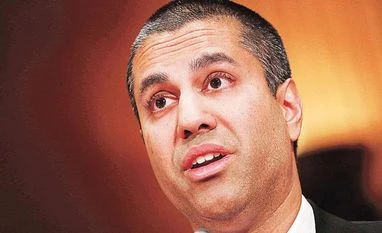 "Man behind repeal of US net neutrality rules plans to step down on Jan 20")
WebinarsNew
Deep DiveNew
Explore Business Standard
Federal Communications Commission Chairman Ajit Pai, who oversaw the repeal of landmark US net neutrality rules, said he plans to leave the commission on January 20
By David Shepardson
WASHINGTON (Reuters) - Federal Communications Commission (FCC) Chairman Ajit Pai, who oversaw the repeal of landmark U.S. net neutrality rules and a series of key spectrum auctions to address growing wireless needs, said Monday he plans to leave the commission on Jan. 20.
Pai's departure will come the same day President-elect Joe Biden is sworn into office. Under Pai, the FCC voted 3-2 in 2017 to repeal the Obama administration's 2015 net neutrality rules barring internet service providers (ISPs) from blocking or slowing internet content or offering paid "fast lanes."
The FCC voted in October to maintain the repeal. "It is patently obvious to all but the most devoted members of the net neutrality cult that the case against the (net neutrality repeal) was a sham," Pai said in October.
Democrats are likely to attempt to reinstate the 2015 rules when they take control of the FCC and argue they are crucial to maintaining an open internet.
Pai, who was tapped by President Donald Trump to lead the agency in January 2017, had said the FCC needed to take a "weed whacker" to unneeded rules. He oversaw the repeal of numerous prior regulations.
Trump has pressed the FCC to adopt new rules to limit the legal protections of social media companies like Twitter.
Pai said in October his agency would move forward to set new rules to clarify the meaning of a key legal protection for social media companies but took no formal action.
The Senate Commerce Committee on Wednesday is set to vote on the nomination of Nathan Simington, a senior administration official, to a seat on the FCC after Trump withdrew the nomination of FCC Commissioner Mike O'Rielly for another term after he made statements questioning the FCC's authority to move ahead with new social media regulations.
In October 2017, Pai rejected Trump's tweet the FCC could challenge the license of Comcast Corp's NBC over stories Trump asserted were not true.
Pai convinced hundreds of internet providers to agree for months not to cancel service for customers impacted by the coronavirus pandemic.
Pai also backed the $26 billion tie-up of Sprint Corp and T-Mobile US after the companies agreed to deploy a next generation 5G network.
(Reporting by David Shepardson; Editing by Chizu Nomiyama)
(Only the headline and picture of this report may have been reworked by the Business Standard staff; the rest of the content is auto-generated from a syndicated feed.)
First Published: Dec 01 2020 | 7:05 AM IST


 Connect with us on WhatsApp