'No first use' of nuclear weapons goes halfway; aim for no nuclear weapons

If only first use is prohibited, it stands to reason that second or third or fourth use is permitted.
Nuclear weapons
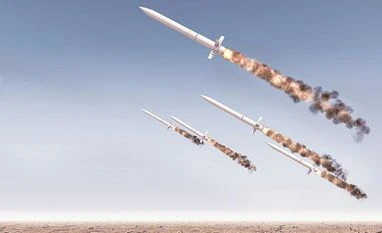
This is a welcome development, inasmuch as it continues the activism aroused by TPNW, the Treaty on the Prohibition of Nuclear Weapons, after a long period in which such activism was largely dormant. (Representative Image)
Peter Weiss | FPIF
3 min read Last Updated : Jun 17 2021 | 11:14 AM IST
The opposition to nuclear weapons has a new name — “No First Use,” or NFU. The idea, pushed by anti-nuclear and peace activists, is to push for an official government policy not to initiate a nuclear conflict.

This is a welcome development, inasmuch as it continues the activism aroused by TPNW, the Treaty on the Prohibition of Nuclear Weapons, after a long period in which such activism was largely dormant. However, it may be a bit early to celebrate what is sometimes referred to as the end of the nuclear age.

The first proposition in the “too early” column is simple enough: If only first use is prohibited, it stands to reason that second or third or fourth use is permitted.

Are we for that? Or are we with the late Rep. Robert Drinan, a Catholic priest, and the late Judge Christopher Weeramantry of the International Court of Justice, in holding that nuclear weapons are so horrendous that they cannot be used in any circumstance? And is it not a basic principle of international law, known as the law of war, that the means of warfare are not unlimited?

Read More: Global nuclear warhead stockpile appears to be growing, SIPRI warns

Even if, contrary to international law, second use were accepted, it would violate another fundamental principle of international law, that of proportionality. Suppose country X fears annihilation by country Y’s superior conventional weapons and country X launches a “low yield” nuclear weapon against country Y as a warning shot across the bow. Would that justify the second use of a dozen nuclear weapons each with a throw weight 50 times that of the single one used by X? Does NFU have anything to say about that?

It would also be worth considering what NFU would do to respect for international law. Second use of a prohibited weapon would be analogous to justifying torture by country Y in response to torture by country X. Similarly, the enactment of NFU would be difficult to reconcile with the current U.S. policy of spending $1.2 trillion on “modernizing” our nuclear weapons over the next 30 years. The same can be said for a policy based on “deterrence only,” since deterrence, to be effective, must be backed by credible willingness to use.

If international law is to preserve its teeth, it cannot do so with halfway measures.

Many if not most supporters of NFU are also supporters of the total and irreversible abolition of nuclear weapons. This huge sector of civil society from all over the world should make itself heard by calling for negotiations toward this much more ambitious goal.

Here is a lesson from the past. Toward the end of the Vietnam War, Congress passed a resolution forbidding the expenditure of federal funds in military actions against Cambodia. It was ignored by the Pentagon. A group of activists, under the leadership of Robert Jay Lifton, decided to call attention to this omission by staging a lie-in at the office of the speaker of the House of Representatives until escorted out by the Capitol Police.

It earned us a night in a D.C. jail and a fair amount of press. And it worked: The bombing of Cambodia stopped.

Similar protests have been undertaken by anti-nuclear weapons activists. The more the better. Thirty years is too long to wait.


One subscription. Two world-class reads.

Already subscribed? Log in

Subscribe to read the full story →
*Subscribe to Business Standard digital and get complimentary access to The New York Times

Smart Quarterly

₹900

3 Months

₹300/Month

SAVE 25%

Smart Essential

₹2,700

1 Year

₹225/Month

SAVE 46%
*Complimentary New York Times access for the 2nd year will be given after 12 months

Super Saver

₹3,900

2 Years

₹162/Month

Subscribe

Renews automatically, cancel anytime

Here’s what’s included in our digital subscription plans

Exclusive premium stories online

  • Over 30 premium stories daily, handpicked by our editors

Complimentary Access to The New York Times

  • News, Games, Cooking, Audio, Wirecutter & The Athletic

Business Standard Epaper

  • Digital replica of our daily newspaper — with options to read, save, and share

Curated Newsletters

  • Insights on markets, finance, politics, tech, and more delivered to your inbox

Market Analysis & Investment Insights

  • In-depth market analysis & insights with access to The Smart Investor

Archives

  • Repository of articles and publications dating back to 1997

Ad-free Reading

  • Uninterrupted reading experience with no advertisements

Seamless Access Across All Devices

  • Access Business Standard across devices — mobile, tablet, or PC, via web or app

Topics :Nuclear weapons policyNuclear treatynuclear deal

Next Story



