
North Korea reports another jump in Covid cases with 232,880 new infections
North Korea leader Kim Jong Un accused officials of immaturity and slackness in handling the escalating COVID-19 outbreak ravaging across the unvaccinated nation.
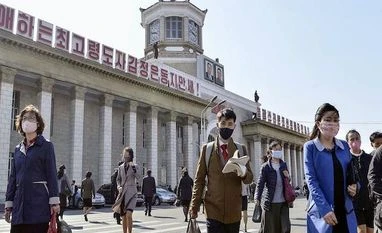 "North Korea reports another jump in Covid cases with 232,880 new infections")
WebinarsNew
Deep DiveNew
Explore Business Standard
North Korea leader Kim Jong Un accused officials of immaturity and slackness in handling the escalating COVID-19 outbreak ravaging across the unvaccinated nation.
North Korea on Wednesday reported 232,880 new cases of fever and another six deaths as leader Kim Jong Un accused officials of immaturity and slackness in handling the escalating COVID-19 outbreak ravaging across the unvaccinated nation.
The country's anti-virus headquarters said 62 people have died and more than 1.7 million have fallen ill amid a rapid spread of fever since late April. It said more than a million people recovered but at least 691,170 remain in quarantine.
Outside experts say most of the illnesses would be COVID-19, although North Korea has been able to confirm only a small number of COVID-19 cases since acknowledging an omicron outbreak last week, likely because of insufficient testing capabilities.
A failure to control the outbreak could have dire consequences in North Korea, considering its broken health care system and its rejection of internationally offered vaccines that has left a population of 26 million unimmunized.
The outbreak is almost certainly greater than the fever tally, considering the lack of tests and resources to monitor the sick, and there's also suspicion that North Korea is underreporting deaths to soften the blow for Kim, who already was navigating the toughest moment of his decade in power.
The pandemic has further damaged an economy already broken by mismanagement and US-led sanctions over Kim's nuclear weapons and missiles development.
The North's official Korean Central News Agency said Kim during a ruling party Politburo meeting on Tuesday criticised officials over their early pandemic response, which he said underscored immaturity in the state capacity for coping with the crisis and blamed the vulnerability on their non-positive attitude, slackness and non-activity.
He urged officials to strengthen virus controls at workplaces and make redoubled efforts to improve the supply of daily necessities and stabilise living conditions, the KCNA said Wednesday.
Kim's comments came days after he ripped officials over how they were handling the distribution of medicine released from state reserves and mobilized his army to help transport the supplies to pharmacies in capital Pyongyang, which were made open 24 hours to deal with the crisis.
Before acknowledging COVID-19 infections last Thursday, North Korea had insisted of a perfect record in keeping out the virus that has reached nearly ever corner of the world, a claim that was widely doubted. But its extremely strict border closure, large-scale quarantines and propaganda that stressed anti-virus controls as a matter of national existence may have staved off a huge outbreak until now.
It's unclear whether the North's admission of a COVID-19 outbreak communicates a willingness to accept outside help. Kim's government had shunned millions of vaccine shots offered by the UN-backed COVAX distribution program, likely because of international monitoring requirements attached to them.
It has so far ignored rival South Korea's offer to provide vaccines, medicine and health personnel, but experts say the North may be more willing to accept help from its main ally China. South Korea's government said it couldn't confirm media reports that North Korea flew multiple planes to bring back emergency supplies from China on Tuesday.
North Korean officials during Tuesday's meeting continued to express confidence that the country could overcome the crisis on its own, with the Politburo members discussing ways for continuously maintaining the good chance in the overall epidemic prevention front, KCNA said.
While Kim was seen wearing masks for the first time following North Korea's admission of COVID-19 infections last week, state media photos of Tuesday's meeting showed Kim and Politburo members engaging in discussions barefaced, in a possible expression of confidence.
(Only the headline and picture of this report may have been reworked by the Business Standard staff; the rest of the content is auto-generated from a syndicated feed.)
First Published: May 18 2022 | 8:24 AM IST


 Connect with us on WhatsApp