
Oil set for biggest weekly losses in 2 years after oil stockpile release
JPMorgan said in a note it had kept its price forecasts unchanged at $114 a barrel for the second quarter and $101 a barrel in the second half of this year
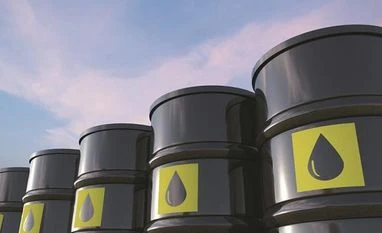 "Oil set for biggest weekly losses in 2 years after oil stockpile release")
Explore Business Standard
JPMorgan said in a note it had kept its price forecasts unchanged at $114 a barrel for the second quarter and $101 a barrel in the second half of this year
Oil extended losses on Friday as members of the International Energy Agency (IEA) agreed to join in the largest-ever U.S. oil reserves release.
After U.S. President Joe Biden announced the release on Thursday, prices slumped 7% and both benchmarks were on course for their biggest weekly falls in two years, at 14% and 13% respectively.
Brent crude futures were down 34 cents, or 0.3%, at $104.37 a barrel by 1:18 p.m. EDT (1718 GMT). U.S. West Texas Intermediate (WTI) crude futures were down $1.21, or 1.2%, at $99.07.
Biden announced a release of 1 million barrels per day (bpd) of crude oil for six months from May, which at 180 million barrels is the largest release ever from the U.S. Strategic Petroleum Reserve (SPR).
Member countries of the International Energy Agency did not agree Friday on volumes or the commitments of each country at their emergency meeting, said Hidechika Koizumi, director of International affairs division at Japan's Ministry of Economy, Trade and Industry. He added that additional details could be known "within next week or so."[nL9N2K200I]
OPEC+, which includes the Organization of the Petroleum Exporting Countries and allies including Russia, on Thursday stuck with plans for an increase of 432,000 bpd to their May output target despite Western pressure to add more.
"The looming flood of U.S. barrels does not change the fact that the market will struggle to find enough supply in the coming months," PVM analyst Stephen Brennock said.
"The U.S. release pales in comparison to expectations that 3 million bpd of Russian oil will be shut in as sanctions bite and buyers spurn purchases."
In a bearish signal for demand, China's commercial hub of Shanghai ground to a halt on Friday after the government locked down most of the city's 26 million residents, aiming to stop the spread of COVID-19.
JPMorgan said in a note it had kept its price forecasts unchanged at $114 a barrel for the second quarter and $101 a barrel in the second half of this year.
"Crucially, we recognize that a release of oil inventories is not a persistent source of supply, and if stranded Russian barrels average more than 1 million bpd next year, this will leave 2023 in a deep deficit, rendering our $98 a barrel price forecast for the year too low," the bank said.
(Only the headline and picture of this report may have been reworked by the Business Standard staff; the rest of the content is auto-generated from a syndicated feed.)
First Published: Apr 01 2022 | 11:37 PM IST

