
S Korea's new Covid cases below 100,000 for first time in 7 weeks
South Korea's new Covid-19 cases fell below 100,000 for the first time in seven weeks on Monday, as the omicron wave is slowing after reaching its peak in mid-March
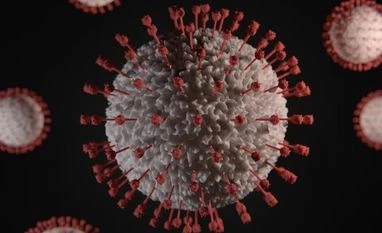 "S Korea's new Covid cases below 100,000 for first time in 7 weeks")
WebinarsNew
Deep DiveNew
Explore Business Standard
South Korea's new Covid-19 cases fell below 100,000 for the first time in seven weeks on Monday, as the omicron wave is slowing after reaching its peak in mid-March
South Korea's new Covid-19 cases fell below 100,000 for the first time in seven weeks on Monday, as the omicron wave is slowing after reaching its peak in mid-March.
The country added 90,928 new COVID-19 infections, including 21 cases from overseas, bringing the total caseload to 15,424,598, Yonhap news agency reported, citing the Korea Disease Control and Prevention Agency (KDCA).
Monday's tally marks the first drop to five digits since the February 22 count of 99,562. It is also nearly a two-month low after the 90,438 registered on February 16.
The daily counts tend to fall on Mondays due to fewer tests on the weekend before rising toward the end of the week.
Yet the latest number reflects the downward curve in the virus trend, which has moved between 300,000 and 400,000 for the past several weeks, with the peak of over 620,000 on March 17.
The death toll from Covid-19 stood at 19,679, up 258 from the previous day. The fatality rate was 0.13 per cent.
The number of critically ill patients came to 1,099, down 15 from Sunday.
Health authorities are expected to announce later this week a new "post-Omicron scheme" aimed at further lifting social distancing and normalising the medical system to that of pre-pandemic days.
People are likely to be allowed to go mask-free outside.
The government is also expected to downgrade the Covid-19 classification in a step toward handling the virus as an endemic disease.
Starting this week, community health centers and makeshift testing stations will no longer provide free rapid antigen tests and only do polymerase chain reaction tests for vulnerable groups, like elderly people.
Other potential Covid-19 patients need to visit a private clinic or hospital for the test and will be charged around 5,000 won ($4.07).
Also beginning Monday, long-term stay foreigners with a record of Covid-19 infection in South Korea will not be required to hand in a negative PCR result when they return to Seoul from another country.
As of midnight Sunday, 44.51 million people, or 86.7 per cent of the population, had been fully vaccinated, while 32.92 million people, representing 64.2 per cent, had received booster shots, according to the KDCA.
(Only the headline and picture of this report may have been reworked by the Business Standard staff; the rest of the content is auto-generated from a syndicated feed.)
First Published: Apr 11 2022 | 8:18 AM IST


 Connect with us on WhatsApp