Saudi Arabia has completed the main wave of arrests in its sweeping crackdown on corruption and is preparing to channel billions of dollars of seized funds into economic development projects, a Saudi minister said on Monday.
"As far as I know, this is the case," Minister of Commerce and Investment Majid bin Abdullah al-Qasabi told Reuters when asked whether authorities had finished taking large numbers of top officials and businessmen into custody.
"Now the government will not keep its mouth shut when it sees a corrupt case. So definitely it will act. But this is — in terms of its magnitude, in terms of scale, in terms of how, in terms of why, in terms of now, that's it," he said.
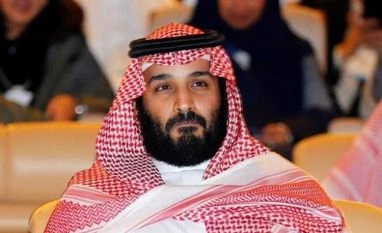
Dozens of princes, officials and businessmen were detained last month, about 200 people questioned, and over 2,000 bank accounts frozen in the purge, which has strengthened the authority of Crown Prince Mohammed bin Salman.
Some suspects will go to court but authorities are seeking to reach financial settlements with most and said last week that the first deals had been done. Senior prince Miteb bin Abdullah, once seen as a leading contender for the throne, was freed after agreeing to pay over $1 billion, officials said.
A special Ministry of Finance account has been opened to receive such funds, which the public prosecutor's office has estimated should eventually total between $50 billion and $100 billion, Qasabi said during a visit to Washington to meet US businessmen.
"This money definitely will be used for housing, for the general public needs, because it is the money for the people. It will not be used for any other issue but for development projects."
The public prosecutor is expected in a few days to issue a statement on the status of the investigation, including how many people are detained and how many face legal charges, Qasabi added.
Riyadh is seeking huge amounts of US and foreign investment to reduce its dependence on oil exports. Qasabi conceded that US businessmen were somewhat concerned by the potential impact of the crackdown on corruption.
"They're worried about if this is ... will be, the end of it or where it will stop," he said.
"But they all think this will be good for the country, because the country's leadership stood visibly to fight corruption, and ultimately this will be a level playing field for everybody."
The economic reforms include a privatisation programme that is to raise some $300 billion. In the past 18 months, there has been little concrete progress as deals have been slowed by red tape, legal uncertainties and high asking prices for assets, foreign businessmen say.
Qasabi said the programme was on track and the government, having identified sectors to be privatised, was working on the complex mechanics of asset transfers that would take place by mid-2019. Sea ports will be a major area of activity, he said.
Privatisation of grain mills under the Saudi Grains Organisation is in its final phase and could be completed by mid-2018, Qasabi added.
The economy has been hit hard in the past couple of years by low oil prices and government austerity measures. Authorities have promised stimulus steps and Qasabi noted they had this year increased the capital of the Saudi Industrial Development Fund, which makes soft loans to businesses.
More stimulus measures are likely to be announced with the 2018 state budget, expected to be released in late December, or before then, he added. Financial incentives offered by the government could total 70 billion riyals ($18.7 billion).

 "Saudi has completed main wave of arrests in anti-graft purge, says minister")












