Scientists unearth hope for new antibiotics

The new compounds appear to interfere with the ability of infectious bacteria to build cell walls
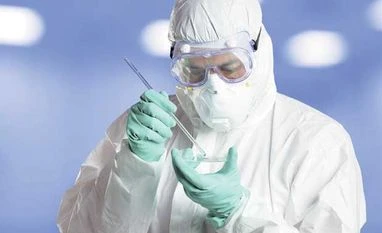
Human antibodies may provide 'silver bullet' against Ebola
Wall Street Journal
Last Updated : Feb 14 2018 | 3:13 AM IST
In a bag of backyard dirt, scientists have discovered a powerful new group of antibiotics they say can wipe out many infections in lab and animal tests, including some microbes that are resistant to most traditional antibiotics.

Researchers at Rockefeller University in New York reported the discovery of the new antibiotics, called malacidins, on Monday in the journal Nature Microbiology.

It is the latest in a series of promising antibiotics found through innovative genetic sequencing techniques that allow researchers to screen thousands of soil bacteria that previously could not be grown or studied in the laboratory. To identify the new compounds, the Rockefeller researchers sifted through genetic material culled from 1,500 soil samples.

“We extract DNA directly out of soil samples,” said biochemist Sean Brady at Rockefeller’s Laboratory for Genetically Encoded Small Molecules, a senior author on the new study. “We put it into a bug we can grow easily in the laboratory and see if it can make new molecules—the basis of new antibiotics.”

The new compounds appear to interfere with the ability of infectious bacteria to build cell walls—a function so basic to cellular life that it seems unlikely that the microbes could evolve a way to resist it. In lab tests, bacteria were exposed to the experimental antibiotics for 21 days without developing resistance, the scientists said.

So far, the new compounds also appear safe and effective in mice, but there are no plans yet to submit it for human testing. “It is early days for these compounds,” Dr. Brady said.

The discovery of antibiotics in the early 20th century transformed modern medicine, but many of them gradually became ineffective as bacteria evolved defenses, often by acquiring protective genes from other more-resistant micro-organisms.

In the U.S. alone, at least two million illnesses and 23,000 deaths can be attributed each year to antibiotic-resistant bacteria, according to the U.S. Centers for Disease Control and Prevention. World-wide, deaths due to untreatable infections are predicted to rise 10-fold by 2050.

About 48 experimental antibiotics are undergoing clinical trials. Few of them, though, are aimed at the most intractable drug-resistant infections and, if past history is any guide, most are unlikely to be approved for patient use, several public-health experts said. 

“Only a fraction of those will make it,” said Kathy Talkington, director of the Antibiotic Resistance Project at the Pew Charitable Trusts in Washington, D.C. “Generating new antibiotics and new therapies will take a while.”

In the quest for new antibiotics, researchers like Dr. Brady and others are deploying advanced genomics, synthetic-biology tools, and a variety of other innovative ways to explore a vast natural reservoir of bacteria notoriously difficult to isolate and study—the so-called “dark matter” of microbiology.

In May, researchers led by chemist Dale Boger at the Scripps Research Institute in San Diego created a more-potent version of vancomycin—considered an antibiotic of last resort for the most intractable infections. In a soil sample from Italy, researchers at Rutgers University last June unearthed a powerful new antibiotic called pseudouridimycin. Neither, though, is ready for clinical trials.

At Northeastern University in Boston, microbiologist Slava Epstein and his colleagues have screened thousands of bacteria strains using a portable device he invented called the iChip that allows bio-prospectors to isolate and grow finicky micro-organisms.

In 2016, they discovered an antibiotic called teixobactin. It too is years away from clinical trials.

“I did not understand how long it takes to develop an antibiotic, even when things go well,” he said.

To broaden their search for new therapeutic compounds, Dr. Brady and his Rockefeller colleagues set up an online citizen science project called “Drugs from Dirt” that solicits soil donations from around the world. The sandy soil that yielded the new malacidin antibiotics was shipped by relatives from the southwestern U.S.

“I think my parents sent it to me,” said Dr. Brady.

Source: The Wall Street Journal

One subscription. Two world-class reads.

Already subscribed? Log in

Subscribe to read the full story →
*Subscribe to Business Standard digital and get complimentary access to The New York Times

Smart Quarterly

₹900

3 Months

₹300/Month

SAVE 25%

Smart Essential

₹2,700

1 Year

₹225/Month

SAVE 46%
*Complimentary New York Times access for the 2nd year will be given after 12 months

Super Saver

₹3,900

2 Years

₹162/Month

Subscribe

Renews automatically, cancel anytime

Here’s what’s included in our digital subscription plans

Exclusive premium stories online

  • Over 30 premium stories daily, handpicked by our editors

Complimentary Access to The New York Times

  • News, Games, Cooking, Audio, Wirecutter & The Athletic

Business Standard Epaper

  • Digital replica of our daily newspaper — with options to read, save, and share

Curated Newsletters

  • Insights on markets, finance, politics, tech, and more delivered to your inbox

Market Analysis & Investment Insights

  • In-depth market analysis & insights with access to The Smart Investor

Archives

  • Repository of articles and publications dating back to 1997

Ad-free Reading

  • Uninterrupted reading experience with no advertisements

Seamless Access Across All Devices

  • Access Business Standard across devices — mobile, tablet, or PC, via web or app

Next Story



