US will continue naval operations in South China Sea: Ashton Carter
China accused US of provocative behaviour after a US warship entered the disputed South China Sea despite warnings
Press Trust of India Washington Notwithstanding the Chinese allegations of a provocative behaviour after a US warship entered the disputed South China Sea despite warnings, Defence Secretary Ashton Carter has said they will continue with its naval operations in the region.
"There have been naval operations in that region in recent days, and there will be in the weeks and months," Carter told lawmakers during a Congressional hearing yesterday when asked about news reports that US warship entered the 12 mile zone of an island in South China Sea which is claimed by China as its territory.
"We will fly, sail and operate wherever international law permits, and whenever our operation needs require it ," Carter said in response to a question.
"We have made a commitment as part of our rebalance to the Asia-Pacific, which is so important to America's future. We're doing more at sea. We're doing more in the way of presence," he said.
"We have said and we are acting on the basis of saying that we will fly, sail and operate wherever international law permits", he added.
Without going into the specifics of the movement of the US naval war ship in South China Sea, the White House reiterated its call for freedom of navigation.
"Freedom of navigation operations serve to protect the rights, freedoms and lawful uses of the sea and airspace guaranteed to all nations under international law. Our freedom of navigation operations do not assert any special US-specific rights," White House Deputy Press Secretary Eric Schulz told reporters.
"I'm not going to comment or confirm any specific military activity, but I will tell you that the US conducts routine operations in the South China Sea in accordance with international law, as we do around the globe," he said.
Reiterating that freedom of navigation is a right, it's a principle, and that regardless of this or any other specific operation, it's a responsibility that the US Navy takes seriously, State Department Spokesman John Kirby said.
"It is a relationship that we want to see continue to improve and to grow for the benefit of both our countries, not to mention the region. So again, without speaking to specific operations, it's the Secretary's desire that our relationship with China will continue to deepen," Kirby said.
Kirby refused to respond to the Chinese allegations of a provocative behaviour from the US.
"I can't speak for China and what they interpreted it as or not. I can just tell you that this is a fundamental principle, and regardless of - and again, I'm not going to speak about details here, operational details - it's a fundamental principle," he said.
"And you've heard me say before that freedom of the seas is not just for whales and icebergs, right? And this is about freedom of the seas," he added.

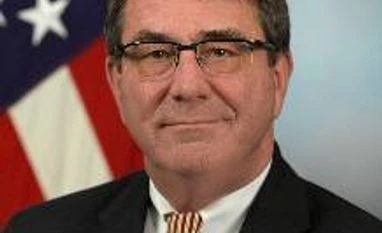 "US will continue naval operations in South China Sea: Ashton Carter")


 Connect with us on WhatsApp